Healthy Chocolate: At 75%+ Cacao, It’s Probably Good For You
CAPSULE REPORT: Will a chocolate bar a day keep the doctor away? Scientific research to-date indicates that bittersweet chocolate is high in antioxidants, which have many beneficial effects. It’s a long way between this early research and recommended “dosage” levels, but experts agree that the benefits exist are at the 75%+ cacao level—those milk chocolate bars won’t help a bit. But all high percentage bars are not created equal, and we give our choices for the tastiest ones on the planet. With the right bar, you might even enjoy 85% cacao daily—which at 1.5 ounces a day, couldn’t hurt. Four of our selections are kosher, and two are organic.
From the moment it was discovered by Europeans, chocolate was a privileged beverage, reserved exclusively for the elite—first for pleasure, and then for a host of medicinal purposes. Long before that, cacao’s health benefits were touted by the ancient Mesoamericans, who used the roasted and pulverized beans to treat a vast array of illnesses—dysentery, jaundice and even kidney stones. Many centuries before scientists understood antioxidants and how they fight cell damage and prevent disease, people ascribed powers to cacao that just happened to be true—some of them, anyway. Those wealthy enough to enjoy chocolate daily certainly fared better than the less-privileged.
Today, anyone can drink hot chocolate or buy a chocolate bar. But if you want to realize the best benefits that cacao can offer—what those might be, we’ll discuss in the last section—the choice shouldn’t be milk or white. While most connoisseurs agree that 70% is the ideal ratio in which the chocolate and the sugar harmonize to create the most balanced and well-rounded flavor, there are higher percentages that can achieve this equilibrium and throw in a few more antioxidants for good. For the purpose of this article, we’ll focus on solid chocolate: chocolate bars from the great producers that are readily available.
Note also that while the potential health benefits of chocolate may be a handsome invitation to eat bar after bar, keep in mind that:
Chocolate does contain a substantial amount of fat from the cocoa butter—which also contributes to the creamy texture. Darker fine chocolate tends to have more cocoa butter to offset the lesser level of sugar. For example, Venchi’s 75% cacao bar has 45.2% fat (cocoa butter), 26% carbohydrate (including sugar) and 8.2% protein (from cacao), while its milk chocolate bar (33.3% cacao, 18.6% milk powder) has 35% fat, 53% carbohydrate (including sugar) and 6.3% protein (from cacao and milk). On the good side, cocoa butter is composed mostly of stearic acid compounds. A healthy fat, it has a neutral effect on cholesterol levels and is not a source of trans fat.
As we know, chocolate contains a lot of sugar. In the milk and white chocolate, a bar can be up to half sugar (a typical 30% milk chocolate bar contains 30% cacao, 20% milk solids, 1% vanilla and emulsifier, and 49% sugar). There are no health benefits from eating low concentrations of cacao and high amounts of sugar. That’s why high-percentage cacao chocolate is doubly “healthier”: a higher concentration of cacao and a lower level of sugar.†
As has often been said, “everything in moderation.” An ounce a day of a fine dark chocolate bar can work into anyone’s diet plan. The Venchi 75% bar has 154 calories per ounce, the milk 159 calories. (By comparison, a Hershey’s milk chocolate bar has 150 calories per ounce.) A good selection of fine chocolates are available in tasting squares or palets, .5 gram wrapped squares that enable one to count out 5 or 6 pieces a day, and also to mix-and-match chocolates from different producers.
†In dark chocolate, where there are no milk solids, the cacao and sugar work in roughly opposite proportions: 75% cacao/25% sugar, 80% cacao/20% sugar, 90% cacao/10% sugar, etc. These proportions are only approximate because, in addition to 1% of the recipe which accounts for the vanilla and emulsifier, fine chocolate producers add extra cocoa butter to their recipes in varying amounts.
Building Up Your Tolerance
Bittersweet chocolates that start at 75% and reach all the way up to 99%, or even 100%, have long been enjoyed by people who like the intense flavor of cacao. The higher the percentage, the less sugar there is in the bar, so the more the pure flavor of the cacao is experienced. But not everyone likes these higher percentage chocolates —or even semisweet dark chocolate, which ranges from 50% to 69% cacao*—simply because they’re accustomed to sweeter chocolate. Children start out eating very sweet milk chocolate, and many people maintain a taste for it. Americans, especially, are accustomed to extra sugar added into everything from bread to tomato sauce. So extra sugar makes chocolate more palatable in much the same manner as adding sugar to coffee.
*There is no universal standard. In America, milk chocolate must have a minimum of 30% cacao, up to 49%. Semisweet is considered 50% to 69% cacao, and bittersweet, 70%+. Europeans consider that bittersweet begins at 65%, and some American producers use the European standard when calling their products “bittersweet.”
Even for people who want the higher concentration of cacao, it is not always advisable to jump directly into the deep end. Regardless of the level of enthusiasm (or the desire for greater health benefits), even the finest unsweetened chocolate can taste terribly bitter and off-putting without proper acclimation. To appreciate the heights of high cacao content chocolate, we recommend that you start right above your current threshold and work your way up. Of course, one can taste a variety of percentages at a chocolate tasting, but start with 70% (or lower, if you wish) and work up to 85% and higher. And if the 85% or 99% seems unpalatable today, return to them in 6 months or a year, after you’ve learned to enjoy to 75% or 85%, respectively.
Not All Bars Are Created Equal
The next thing to note is that chocolate is an agricultural crop like wine: There are good years and bad years. Also as with wine, some producers do better with different bottlings (the reserve Cabernet may not be as impressive as the regular bottling, or vice versa; the Chardonnay from one property is far superior to the Chardonnay from another, etc.). And, different vintners simply excel at making one type of wine, but not another.
By analogy, not all high cacao content chocolates are good, just as not all reserve wines are good. The quality of the finished chocolate is heavily reliant on the quality of the beans and the processing after harvest. So if the beans are of low quality and/or were poorly processed, then the 85% chocolate they were turned into will be 100% bad. Photo of cacao beans (very good ones) courtesy of Scharffen Berger Chocolate Maker.
Also, the chocolatier’s “recipe” produces a particular taste profile. Like coffee, maybe the roast is too dark for you. Maybe it’s too light. Maybe you don’t like the mouthfeel. There are many steps in the production process that impact the taste of the final product. Your personal preferences need to match those of the chocolate-maker.
That being said, we’ve tasted almost every high-percentage chocolate bar available, and present to you our favorites: bars that we think best their peers at the particular percentages.
The Chocolate Bars
Here we present a selection of bars from prominent chocolatiers in America, Belgium, France and Switzerland. Two names that may be new to you are Theo Chocolate, a young organic chocolate company in Seattle and the first company in the U.S. to make both organic and Fair Trade chocolate from bean (you can watch it being made at the factory); and Endangered Species Chocolate, an Indianapolis company that makes products from cacao that is ethically traded, naturally shade-grown, certified vegan, kosher and organic.
You’ll note a broad range of prices. Most bars are 3 to 3.5 ounces, yet the prices range from $2.50 to $7.99. (Bars of 99% and 100% cacao tend to be a smaller size to offset the higher expense of the cacao.) While it is true that the more expensive bars are smaller-production artisan bars, this range shows that in some instances, you can have a great chocolate experience for less money if you know where to pick and choose. (As with wine, you need to read the reviews to discover the bargains.)
All of the kosher-certifed chocolates are designated with a †, organic chocolates with a ‡. Although the kosher chocolates contain no milk solids, some have a kosher (dairy) certification because they are made on equipment that also processes milk chocolate.
75%. Bonnat and Pralus both have ranges with a baseline cocoa content of 75%. Each chocolate of the two lines is also single origin, so there is extra incentive to taste chocolates of the same percentage from different growing regions of the world.
Bonnat 75%†: Made in Voiron, France, a town in the French Alps, this chocolate emphasizes a darker roast and delivers berries as defining flavors. The overall flavor is quite dark with a coffee-like undertone. The most intense of the Bonnat range are the Venezuelan bars. El Rosario (near Lake Maracaibo) is bold and heavy; Puerto Cabello is sharp and fruity; and Chuao attacks with molasses and an assortment of mixed berries. A 3.5-ounce bar is $7.50 at Chocosphere.com. Certified kosher (pareve) by Kosher Federation (Federation of Synagogues Kashrus, London). Read our full review of Chocolat Bonnat.
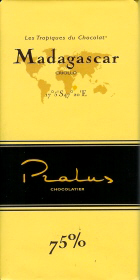
Pralus 75%: Made in Roanne, France and even darker than Bonnat, the defining flavors are smoke and wood, with a deep coffee undertone and quite often a sharp acidity, depending on the bar. Pralus seems to be more experimental, if not extreme, and offers a wider assortment of flavors across the line. The Venezuela bar is heavy as a brick with its dense chocolatiness, while Madagascar is much lighter but still woody and dark due to the roast. A 3.53-ounce bar is $7.99 at Chocosphere.com. Read our full review of Pralus chocolate.
77%.Chocolove 77%†: Made in Boulder, Colorado, this bar, called Extra Strong Dark, certainly is strong as the name suggests. Extra cocoa butter has been added to soften the flavor, which in turn makes the bar more palatable to people who might not like the higher level of cacao. It has notes of coffee with a chocolaty undertone that will appeal to those seeking a pure cocoa flavor. A 3.2-ounce bar is $2.95 at Chocosphere.com. Certified kosher (dairy) by Tablet K. Read our full review of Chocolove.
80%.Pralus Fortissima 80%: This chocolate that tastes much milder than the cocoa content suggests. However, it still remains sufficiently strong with plenty of good flavor to satisfy those seeking strength and those seeking complexity. A 3.53-ounce bar is $7.99 at Chocosphere.com.
82%. Scharffen Berger 82%†: From Berkeley, California, this bar might shock some taste buds due to the varied nature of the flavor. But overall it’s a good representation of this class of low-eighty-percent chocolates. It’s quite woody with a few lighter fruit notes and a subtle bitterness to add further depth. A 3-ounce bar is $4.35 at Chocosphere.com. Scharffen Berger is certified kosher (parve) by OU. Read our full review of Scharffen Berger chocolate.
84%. Theo Ghana 84%‡: This is most likely the best Ghana chocolate currently available on the market. With its light blueberry tone and mild bitterness laid atop a strapping boldness, there is very little room for improvement here. A 3-ounce bar is $5.50 at Chocosphere.com.
85%. This is a popular percentage to work with: many chocolatiers strive to work the “interval numbers”: 70, 75, 80, 85, etc. Numbers like 84% or 88% occur when the chocolatier’s particular recipe requires a different concentration to achieve the flavor he or she is seeking from the beans at hand.
Bernard Castelain 85%: In the town of Châteauneuf du Pape in the Rhone Valley of France, Bernard Castelain makes one of the better 85% interpretations on the market. This outstanding chocolate leans heavily towards boldness without any fruitiness whatsoever. Heavy with coffee and deep with its chocolatiness, only a little bit will satisfy but a lot might be needed to sate the hedonist. A 3.5-ounce bar is $4.95 at Chocosphere.com.
Galler 85%: One of the milder 85% bars but still strong enough to satisfy even the most demanding palate. Cocoa and sweet vanilla characterize the profile. Galler is an official supplier to the Royal Court of Belgium—and you can enjoy the same 3.5-ounce bar as royalty for $5.35, at Chocosphere.com.
Lindt Excellence 85%: Lindt is one of the best-known names in Swiss Chocolate, and they make what is probably the best chocolate of the 80% range currently on the market. It’s deep and bold, yet slightly fruity with cranberry nuances and a mild acidity. This all creates superb balance and a variety of qualities unrivaled by most companies. A 3.5-ounce bar is $2.50.
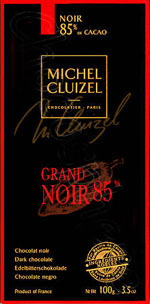
Michel Cluizel Noir de Cacao 85%: Another fine 85%, with coconut and deep cocoa as the driving force behind the flavor delivery. Slightly bitter too, this is indeed one of the more interesting chocolates of this class. A 3.5-ounce bar is $5.10.
88%. There aren’t many at this percentage, but two worth trying:
Hachez Cru Premier 88%: Hachez of Germany enters into this range a chocolate that’s somewhat mild due to an excessive embellishment of cocoa butter—it covers up the excellent flavor of the chocolate. But overall, it should serve as a good introduction for the most wary of palates.
Endangered Species Extreme Dark Chocolate (Black Panther) 88%† ‡: Perhaps over-roasted to a minor degree, there is a slight inflection of ash in the flavor. But overall, the chocolatiness is strong and quite pleasing, in much the same manner as Castelain. 3-ounce bar, $2.75 at Chocolatebar.com. Certified kosher (dairy) by Orthodox Union.
90%. Slitti Tropicale 90%: This could very well be the archetypal Arriba Nacional bar on the market today. In fact, it’s one of the deepest and boldest chocolates available. The impact is simply gigantic and will leave you floored. Better sit down while tasting this one. A 3.5-ounce bar is $8.95 at Chocosphere.com.
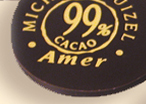
99%. Michel Cluizel Noir Infini 99%: This is a sophisticated unsweetened with amazing complexity, including coconut, clove, and orange. The chocolatiness is heavy and very satisfying. Only a little will satisfy, but who can resist? A 1-ounce bar is $2.60 at Chocosphere.com.
100%. Domori 100%: Domori produces an extensive range of unsweetened chocolate bars, but one of the best is the 100% from the Style Line. It’s intensely chocolaty, rivaling Cluizel’s Noir Infini, but Domori’s characteristic fermented nuances add a distinct twist. A 2.6-ounce bar is $5.95 at Chocosphere.com.
We’ve “cherry-picked” these bars for you according to our experience. Browsing through shops, you may find others. Feel free to nibble away, but remember the caveat that not all bars are created equal. Still, you may very well find something wonderful.
What The Research Says
Overall Benefits. In general, chocolate and its major component, cacao, offer the following*:
Energy. Because of the high concentration of calories in a relatively small volume and thanks to the positive relationship between sugars and fats, chocolate is a quick source of physical and mental energy.
Fighting Free Radicals. The polyphenols (a class of flavonoids) in cacao are believed to counteract free radicals. These powerful antioxidants are Flavanols are more abundant in cocoa beans than in red wine or green tea. According to research, free radicals accelerate the ageing process and are responsible for the degeneration of certain body functions, such as the ability to see or the nervous system. Flavonoids appear to have positive cardiovascular effects, strengthen the immune system, lead to lower cholesterol/blood pressure and improve the function of blood vessels.
Lowering Cholesterol. Cocoa butter is a unique saturated fat which, according to recent research, has a neutral effect on the production of bad cholesterol and could possibly promote the creation of good cholesterol. The only cholesterol in chocolate comes from the small amount of milk used in milk and white chocolate. There is no cholesterol in dark chocolate.
Low Glycemic Index. Thanks to the unique composition of chocolate, the sugar present is absorbed very slowly by the human body. The added sugar only causes the blood sugar to rise by a very slight degree, which results in a low Glycemic Index. Chocolate does not harm teeth.
Stimulating Effects. Cocoa and chocolate also contain minimal levels of theobromine and caffeine. These substances have a stimulating effect on the central nervous system, the heartbeat and the relaxation of the respiratory muscles. Recent medical research indicates that theobromine and caffeine reduce fatigue and improve concentration.
Dietary Fiber. Chocolate has a beneficial effect on digestion. Cocoa mass contains around 15% of soluble and non-soluble dietary fiber. This fiber improves intestinal movements and keeps the intestinal and stomach walls clean.
*According to Barry Callebaut, one of the world’s largest producers of fine chocolate.
How Much Should Be Eaten To Benefit? As Robert Steinberg, M.D., co-founder of Scharffen Berger Chocolate Maker, points out in his new book (with co-founder John Scharffenberger, The Essence of Chocolate, no one can yet state conclusively that eating chocolate can help you. It has not yet been proven scientifically and conclusively, in the manner that we know calcium builds strong bones and teeth. Essentially:
Even at a high percentage of cacao, many variables affect the antioxidant levels: variety of bean, origin, fermentation, roasting temperature, processing techniques. Thus, one 85% cacao chocolate can’t be assumed to have the same level of antioxidants as the next. In the future, should chocolate bars be the medium by which we consume antioxidants, bars would have to be labeled, like vitamins, so we’d know how much we’re consuming.
At this point, no one has a recommendation on what the dosage would be. It may be that other sources of cacao, such as nibs, will become the preferred source.
In the interim, many healthcare professionals agree, you can’t go wrong with eating an ounce of high percentage cacao chocolate a day. In a recent study at the Hull and East Yorkshire Hospitals NHS Trust in the U.K., where subjects ate 1.5 ounces of 85% cacao daily, a new health benefit emerged: chocolate can help combat the symptoms of Chronic Fatigue Syndrome. In 8 weeks of the test, no one gained any weight at all!
And, in case it isn’t perfectly clear, all of the potential benefits accrue to plain bar chocolate. Filled chocolates and truffles contain so little cacao on an ounce-by-ounce comparison that they don’t fit into the equation at all. Not that they shouldn’t be enjoyed—just not in the name of “health.”
Can You Lose Weight On A Chocolate Diet? Astute physicians have warned that the sugar and fat in most chocolate offsets the health benefits of the polyphenols. A Japanese physician and professor at Ibaraki Christian University professor, who specializes in “lifestyle diseases” like hypertension and hardening of the arteries, has a different perspective. In an interview in the February 24, 2007 issue of the Japanese lifestyle magazine Shukan Gendai, Dr. Hiroshige Itakura, maintains that eating chocolate can help you lose weight—under certain conditions.
The chocolate has to have cacao content of at least 70%—something in the 90% would be preferable, for those who enjoy very bitter chocolate.
One can eat no more than 50 grams (1.8 ounces, about 300 calories, which need to be offset by giving up equivalent calories in your meal plan).
It should be broken up and consumed during or before each of the three meals.
Following these guidelines daily for a month could lead to a loss of 2 to 3 kilograms (4.4 to 6.6 pounds)
The greater the cacao content, the more effective its weight loss effects are, Dr. Itakura says. Here’s how he believes the science works:
Cacao contains a polyphenol that absorbs glucose and burns fat.
Cacao combats the oxidization of cholesterol and thus works to prevent the hardening of the arteries
The theobromine in cacao, which provides the bitter flavor, also has relaxing quantities (seratonin reuptake inhibitors) that can combat stress, a major cause of overeating. Chocolate also contains substantial amounts of A, B-complex, D and E and minerals calcium, copper, iron, magnesium, manganese, phosphorous and zinc. The % RDA per 100g of chocolate will vary based on cacao content. Cacao also contains properties that fight harmful bacteria.
Dr. Itakura’s research on the topic first appeared in the Journal of Nutritional Science and Vitaminology (2000, vol. 46, no 4, pp. 199-204). If you’d like to try the diet, he advises that the most effective way to eat chocolate is to let it melt in your mouth.
Recent Articles From Our NutriNibbles™ News Feed:
Subscribing notifies you whenever
there are
new additions
to the NutriNibbles™ section.


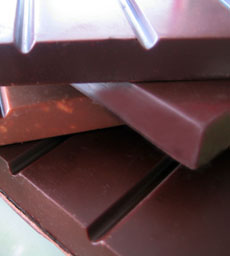
 of the cacao is experienced. But not everyone likes these higher percentage chocolates —or even semisweet dark chocolate, which ranges from 50% to 69% cacao*—simply because they’re accustomed to sweeter chocolate. Children start out eating very sweet milk chocolate, and many people maintain a taste for it. Americans, especially, are accustomed to extra sugar added into everything from bread to tomato sauce. So extra sugar makes chocolate more palatable in much the same manner as adding sugar to coffee.
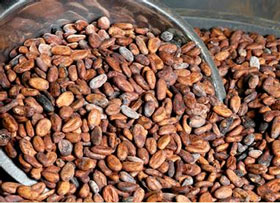 wines are good. The quality of the finished chocolate is heavily reliant on the quality of the beans and the processing after harvest. So if the beans are of low quality and/or were poorly processed, then the 85% chocolate they were turned into will be 100% bad.
 heavy; Puerto Cabello is sharp and fruity; and Chuao attacks with molasses and an assortment of mixed berries. A 3.5-ounce bar is $7.50 at Chocosphere.com. Certified kosher (pareve) by Kosher Federation (Federation of Synagogues Kashrus, London). Read our full review of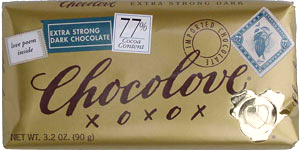
 Galler is an official supplier to the Royal Court of Belgium—and you can enjoy the same 3.5-ounce bar as royalty for $5.35, at Chocosphere.com.