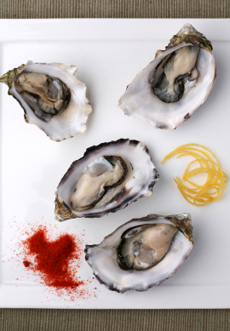
A plate of Pacific oysters: heaven! You can order them from Willapa Oysters. Photo by James Antrim | IST.
|
KAREN HOCHMAN is Editorial Director of THE NIBBLE.
|
|
July 2007
Last Updated April 2013
|
|
All About The Oyster
Oysteer Information Including An Oyster Glossary
Part 1: Oyster Facts
CAPSULE REPORT: If you’re looking for oyster information, here it is! This is page one of a nine-page article about the oyster, including a six-page oyster glossary. Click on the black links below to visit other pages. If you love oysters as much as we do, you’ll devour every word—with or without cocktail sauce. We have many food glossaries that include other favorite foods as well, including a 13-page Seafood Glossary.
Oyster Facts
Oysters, bivalve mollusks,* are a splendid food: low-calorie, low-cholesterol, dense in protein and an excellent source of vitamins A, B1 (thiamin), B2 (riboflavin), B3 (niacin), C (ascorbic acid) and D (calciferol). Four or five medium-size oysters supply the recommended daily allowance of iron, copper, iodine, magnesium, calcium, zinc, manganese and phosphorus. Our only complaint is the expense!
*A mollusk is a chiefly marine invertebrate of the phylum Mollusca, typically having a soft, unsegmented body, a mantle, and a protective calcareous shell. Mollusks include the edible shellfish and snails.
Oyster History
Zoologists have determined that first appeared during the Triassic period, some 200 years ago, when dinosaurs roamed the earth. Oysters have been a popular food since the days of Neolithic man; they have been cultivated for at least 2,000 years (the Chinese cultivated them in ponds). The ancient Romans loved them and imported them from all over the Empire, sending slaves to gather them from the English Channel; the Celts and Greeks were also noted oyster lovers (Aphrodite, the Greek goddess of love and beauty, emerged from the sea on an oyster shell, forever making oysters an aphrodisiac). Our word oyster comes from the Middle English and Old French oistre, derived from the Latin ostreum and the Greek ostreon.
Early European settlers in America found an abundance of oysters along the coastlines and in the bays of the 13 colonies, which provided an easily-harvested source of protein. Up to the early 19th century, oysters were inexpensive and were eaten by the working classes. However, to meet increased demands, foreign varieties were introduced which brought disease. Combined with pollution from the Industrial Revolution, oyster beds were wiped out; oysters became rare and thus a delicacy. They remain a culinary favorite and are found around the world, in both natural and cultivated beds.
The Oyster Family
Edible oysters belong to the family Ostreidae; within the family are two geniuses (genera), Crassostrea and Oistre. While there are dozens of species worldwide, the three primary species harvested the U.S. are the Kumamoto, the Pacific and the Virginia (see a comparative photo); in limited quantity are the Flat Oyster (erroneously called the Belon in the U.S.) and the Olympia.
- There are large differences among oyster species with regard to flavor and texture; region and growing conditions (“terroir”) have a marked impact on their flavor. Tastes range from some sweet to salty, some have seaweed notes, mineral flavor or even hints of melon and mushrooms. Even oysters of the same species will vary considerably in flavor depending upon where they are grown. And, like winemakers, oyster growers can vary their techniques to produce different flavors. For example, in a rack and bag suspension, the water runoff can be blocked at the end of the oysters’ growing period. This causes a type of algae to grow that the oysters will eat, providing a different nuance of flavor.
- Oysters are filter feeders, siphoning up to 25 gallons of water a day through their system. The flavor of their meat is a function of the trace minerals, salinity, and other nutrients in the water. Like wine varietals, oysters gain much of their flavor from their terroir (environment): The water in which they grow imparts its unique mix of salinity and minerals. As a result, some oysters taste sweeter, others saltier or more briny; some have a distinct mineral flavor, others have been compared to melon. Because their flavor varies by location, oysters are usually marketed by where they are harvested, so there are scores of names for the same species. Even within the same area, the taste of the oysters will change based on the water. When there is more rain and the waters are more dilute, the oyster is less salty. The flavors will change as the algae wax and wane.
|
|
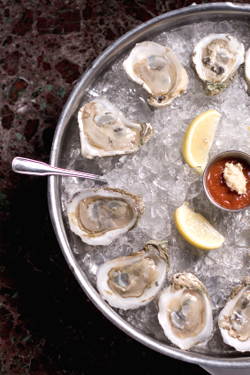
One of life’s great pleasures: a dozen oysters on the half shell. Photo by Nathan Maxfield | IST.
|
How To Store Oysters
You can buy oysters in the shell or shucked. You’ll want them in the shell if you plan to serve them raw, on the half shell. If you’re cooking the oysters, you may prefer to pay for the convenience of shucked oysters.
- Keep oysters refrigerated, covered with a damp cloth. They need good air circulation.
- Do not store oysters in a covered bowl, plastic bag, airtight container, the meat drawer or in even in a bucket of sea water.
If you’re doing the shucking, all things being equal, thick-shelled oysters are easier to shuck. Oysters that are beach-grown (cultivated) tend to have nice, thick shells. If in doubt, ask your fishmonger.
- Like all seafood, oysters deteriorate every day they are out of the water. They should be consumed as fresh as possible, ideally, on the same day of purchase. If you are eating the oysters raw, the freshness is that much more critical.
- Unless you buy your oysters at the shore from an oysterman or have overnighted from one, you don’t know when they were harvested or how long a life they have left (unless you have a trusted fishmonger who can swear to their provenance). We don’t get to the shore much, but we purchase our oysters from Willapa Oysters, where they are harvested to order and overnighted; the freshness is amazing.
Now that you have your oysters, what should they taste like?
Continue To Page 2: The Flavor Of Oysters
Go To Article Index Above
|