White teas are so delicate in flavor that they need to be enhanced with other flavors to please the Western palate. This poetically-named Tropical Peony white tea contains coconut, pineapple, and rose petals—but no peonies. The silvery needles show that it is a white tea. This tea is available at TavalonTea.com. White teas are so delicate in flavor that they need to be enhanced with other flavors to please the Western palate. This poetically-named Tropical Peony white tea contains coconut, pineapple, and rose petals—but no peonies. The silvery needles show that it is a white tea. This tea is available at TavalonTea.com.
March 2005
Last Updated January 2026
|
|
Types Of Tea & Tea Terminology
Tea Glossary Page 15: Terms U To Z
This is Page 15 of a 15-page glossary. Click on the links below to visit other pages. This Tea Glossary is one of our many food glossaries.
Click on the letter of the alphabet in this bar to get to a term:
a b c d e f g h i j k l m n o p q r s t u v w x y z
This glossary is protected by copyright and cannot be reproduced in whole or in part.
|
WASHI
These washi paper-covered tea tins are designed with traditional Japanese patterns and handcrafted techniques. The tins have an inner lid to ensure airtight storage. Washi are tea tins dressed in colorful,l patterned mulberry paper, typically handmade using old artisan techniques. “Wa” means Japanese, and “shi” means paper. Designs vary widely; some are accented with gold.
|
|

A washi-covered tin of jasmine tea “pearls.” Photo courtesy Mighty Leaf tea. |
WEEDY
A grass, hay or cabbagey taste associated with black teas that have been under-withered during manufacture. Sometimes referred to as “woody.” Green teas with vegetal aromas and flavors may be called weedy in positive terms. The latter can vary from simple herbaceousness to scents of new-mown hay.
WEIGHT LOSS TEA
See wu long tea, below.
WELL TWISTED
Used to describe whole-leaf orthodox tea grades. Also referred to as “well-made” or “rolled.”
|
WHITE TEA
White tea is the most delicate tea, picked early in spring when all the leaves, which are green, are still in a bud and covered with fine, silvery white hair or down (hence the name). The least processed tea, white teas, contains only the buds and very young leaves of the tea plant. As the buds can be harvested for only a short period every spring, white tea is the rarest and most costly of teas (it also must be hand-picked and hand-processed). Because it is new growth, and there are fewer buds per plant compared to leaves, white tea is produced in lesser quantities than green or black tea, accounting for the rarity.
|
|

Silver needle, or Bai Hao Yin Zhen, is the premium grade of classic white tea and consists only of the first flush spring buds of the tea plant. An organic, Fair Trade silver needle is available from RishiTea.com. |
Production of white tea is similar to green tea: very light processing and no fermentation (oxidation). The tea remains in its natural state, subject only to withering and firing (steaming). The buds are withered or wilted in the shade while subjected to cool circulating air, to allow the moisture to evaporate; then they are gently dried in natural sunlight. In order to obtain a level of moisture loss comparable to other teas, the leaves are left to wither for a much longer period of time: from 52 to 60 hours. They are then immediately dried in large pans for approximately half an hour. The process might appear simple, but the production of white teas is actually one of the most delicate: withering in the heat and humidity of the open air is impossible to control, and the tea planter exercises great skill to accurately predict weather conditions and organize the plucking accordingly.
|
Depending on the strain, the flavor of white tea can vary from light to sweet to savory or velvety, and the color of the liquor can be almost clear to pale red. The most delicate tasting of teas, examples of white teas are Silver Needle, Snow Bud, White Peony, and Drum Mountain White Cloud. White tea has been produced in China, most notably in Fujian province, for thousands of years. Most white tea still comes from China, but other countries are starting to produce it. In terms of health benefits: white tea retains more catechins (antioxidants); some studies have found that it has a greater anti-viral and anti-bacterial effect than green tea. It also has a higher level of caffeine than green tea, because it is the tip of the leaf, before it fully forms so there’s more of a concentration.
|
|

Ancient Moonlight White, an organic, Fair Trade white tea from RishiTea.com. It has natural flavors of ripe melon and sweet honeysuckle flowers. Photo courtesy RishiTea.com. |
Because the leaves are delicate, they should be steeped for only a minute, with water at 175°F. Westerners are not accustomed to the very delicate flavor of white tea; many sold here are flavored to provide more taste.

Silver Needle, White Ambrosia (flavored with coconut, fruit and vanilla) and White Ginger Pear teas. Photo courtesy TeaForte.com.
WINEY
A mellow quality, characteristic of some Darjeelings and Keemuns acquired when they are aged six months or more. The term can also be used to describe over-fermented tea.
WINTER TEA
See kukicha.
WITHERING
The first step in the production of most teas. Involves letting the fresh leaves wither for some period of time after plucking to reduce the moisture content.
WOODY
See weedy.
|
WU LONG (WUYI LONG) SLIMMING TEA
Hyped as a rare tea from a special mountain in China that enables one to “drink away pounds of stubborn body fat and inches from your waistline within 30 short days,” wu-long, which is known as oolong in the West (and translates to “black dragon”), is just plain oolong tea given an old-country name to enhance its mystique. All teas have about the same health benefits—in fact, the non-oxidized white and green have more antioxidants than black and oolong. As with any fad diet, there is a grain of truth to the benefit: Clinical trials conducted at the University of Geneva in Switzerland indicate that green tea appears to raise metabolic rates and speed up fat oxidation.
|
|

Best Wulong says that this “slimming tea“ is “guaranteed to work or your money back.” It does work as a diuretic that reduces by eliminating water from your body. |
The catechin polyphenols in green tea raise thermogenesis (the rate at which calories are burned), and thus overall energy expenditure. However, there’s a big stretch between “appears to raise metabolic rates” and “drink away pounds...within 30 short days.” Plus, oolong is not green tea. There is no miracle to drinking tea, but lots of enjoyment and healthy antioxidants to be gained from drinking good tea.
|
YAUPON TEA
Yaupon tea is a caffeinated beverage brewed from the dried leaves of the native North American yaupon holly plant. It has been historically used by Indigenous peoples and is now experiencing a revival for its unique flavor and health benefits: antioxidants and focus-enhancing compounds, which offer energy without the jitters of coffee.
It’s often described as tasting similar to green tea with citrus notes, and is available in green or black varieties. It contains caffeine, antioxidants (polyphenols, rutin, chlorogenic acid), and theobromine, a substance that’s also found in cacao beans, cola nuts, and tea. These stimulants provide a smoother “lift” than coffee.
|
|
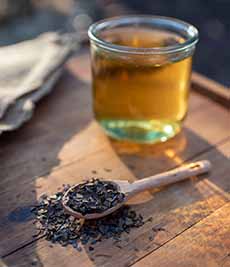
The green leaves of the yaupon holly plant (photo below) are roasted. Since it is not made with conventional tea leaves (Camellia sinensis), yaupon is considered an herbal tea even though it has caffeine. Get it at Fava Tea Company. |
A cup of yaupon typically has significantly less caffeine than coffee, often around one-third the amount—about 40-60 mg compared to coffee's 90-140+ mg. But it provides a smoother, less jittery energy due to the presence of theobromine alongside the caffeine.
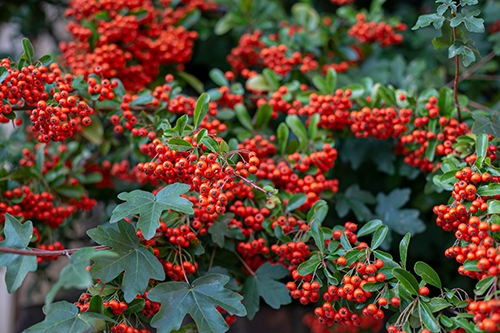 The yaupon holly bush. The leaves are made into tea (photo © Evie Fjord | Unsplash). The yaupon holly bush. The leaves are made into tea (photo © Evie Fjord | Unsplash).
YELLOW TEA
Refers to either a high-quality tea served at the Imperial court or a special tea processed similarly to green tea, but with a slower drying phase.
YERBA MATÉ
See maté.
YUNNAN
A black tea grown in the Yunnan province of southwest China and known for its spicy/peppery character. The Yunnan region also produces pu-erh tea. Along with Assam, the region was the original site of wild tea plants.
ZIMBABWE
A tea-producing country in Africa.
Go To The Article Index Above
Lifestyle Direct, Inc. All rights reserved. Images are the copyright of their respective owners.
|