March 2006 |
|
Product Reviews / Main Nibbles / Jams, Jellies & Nut ButtersPeanut Butter ExplosionPage 1: Peanut Butter History
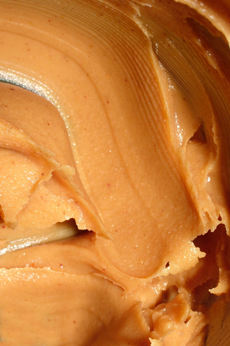
CAPSULE REPORT: A product developed for the poor becomes an American staple becomes a specialty food. Read about peanut butter, or PB as it is affectionately called: history, trends, health benefits, and some brands to look into. This is Page 1 of a three-page article. Click on the black links below to visit other pages.
Overview
Ask yourself this question: is it really the case that Americans want innumerable choices for even the most everyday grocery item, or is it merely that there’s always someone who thinks he can somehow outdo products already on the shelves? Is it a matter of scenting potential profit, one of exercising creativity, or one of altruism, showing people that there’s a better product of this type to be had? Probably, there are elements of all of those in the correct answer. If you’re wondering where peanut butter fits into this equation, perhaps you aren’t aware that the staple food item can have so many possibilities. Peanut Butter History: Who Invented Peanut Butter?
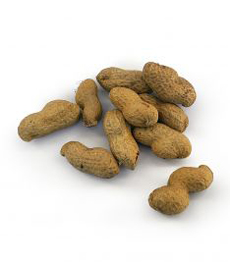
Peanuts have been around for a long time. They were known as early as circa 950 B.C.E.; it is acknowledged that the ancient Incas consumed peanuts and made a paste-like substance from them. The first commercial crop in the U.S. was grown in the early or mid 1840s. George Washington Carver is often credited with inventing peanut butter: the scientist developed 105 recipes using peanuts and more 100 nonfood products from cosmetics to dyes, paints and fuel. Carver’s intent was to enable poor farmers to grow alternative crops like peanuts, as a source of their own food and as a base for other products that would improve their quality of life. But it is not clear who made the first peanut butter to become a commercial product. Some sources attribute this “invention” to Dr. Ambrose Straub, a St. Louis physician, who created it in 1880, crushing peanuts into a high-protein paste for his patients who couldn’t chew. George A. Bayle Jr., a friend of the doctor, owned a food processing plant and soon started making this “nut butter” commercially. His creamy PB was sold by the pound, scooped from a barrel at the corner grocery store (as were many products of the day).
That first creamy PB
was made by a local food producer, George A. Bayle Jr., and sold by the
pound, scooped from a barrel at the corner grocery store (as were many
products of the day).
Because of its nutritional appeal, peanut butter was adopted by health
spas, and known to wealthy people who frequented them. Recipes for early
20th century tea sandwiches included peanut butter.
Companies began selling peanut butter as a mainstream product, targeting
their promotions to the upper classes. When this market became
saturated, the manufacturers began to add sugar to give peanut butter
appeal to children.
That’s when PB took off to become the popular product it is today—and
ironically, on a trajectory from the tea salons of the upper classes to a
budget staple of the far-from-upper-class.
Read more at: http://www.thenibble.com/reviews/main/candy/old/history-of-peanut-butter.asp The product gained popularity later at the Chicago World’s Fair of 1893. One of its biggest champions and promoters was Dr. John Harvey Kellog, a vegetarian, who also claimed to have invented it (and started a company to make it, yet he didn’t patent it); and his brother Will. It was served at his famous sanitarium in Battle Creek, Michigan, where he treated the rich and famous.
What About John Kellogg?
Until a written record appears, there is no proof that Kellogg invented peanut butter, except for his own claim. There is no record that he knew George Bayle. So we continue to thank that unnamed doctor, who invented PB so his patients could chew protein—and not Kellogg’s patients, who had intestinal difficulties.
PB Marches On
Because of its nutritional, vegetarian appeal, peanut butter was adopted by other health spas, and became known to wealthy people who frequented them. When they returned home, their cooks made peanut butter—which is why what became the food of the masses began as the food of the elite.
Peanut butter found its way onto tea sandwiches, in cereals and drinks, as a substitute for cream and regular butter, as an ingredient in soups, as a dressing for vegetables.
In 1904, C.H. Sumner was the first to introduce branded peanut butter to the masses at the Universal Exposition in St. Louis. In 1908, Krema Products Company of Columbus, Ohio begins selling peanut butter, and remains the oldest peanut butter company still in operation today. Here are further details of the growth of PB manufacturers.
By the early 20th century, companies were selling packaged peanut butter as a mainstream product, targeting their promotions to the upper classes. When this market became saturated, the manufacturers began to add sugar to give peanut butter appeal to children. That’s when PB took off to become the popular product it is today—and ironically, on a trajectory from the tea salons of the upper classes to a budget staple of the far-from-upper-class.
By the beginning of the First World War, a number of companies were making peanut butter. By World War II the inexpensive and shelf-stable product became part of the soldiers’ rations, along with jelly. Guess what: The GIs combined the two with their crackers and loved it.
Back home, with meat rationed, it was also consumed as a good source of protein. Returning GI’s wanted more peanut butter and jelly sandwiches (in addition to meat).
These days, according to the website of one of the industry giants, American consumption of peanut butter is roughly six pounds per household annually, or 570 million pounds (and a lot of sandwiches!) per year. Over three-quarters of American households buy peanut butter. Americans spend about eight hundred million dollars a year on it; we’re the number-one consumers, but peanut butter is also popular in Canada, the Netherlands, parts of the U.K., Germany and Saudi Arabia.
And some consumers are deciding that what’s omitted is as important as what might be added. A quick survey of shelves will show peanut butters with honey, with added vitamins and minerals, striped with grape jelly or chocolate, whipped, and reduced in fat, sugar or sodium.
And those are just examples found in one better chain grocery store. Natural food stores and the internet offer much greater depth for those who wish to expand their peanut butter horizons.
_________________ *Removing much of the peanut oil and replacing it with flaxseed and flax oil, also substantially reduces the total fat. Continue To Page 2: Natural Peanut Butter
|
The Nibble Blog
The Latest Products, Recipes & Trends In Specialty Foods
New food adventures are served up daily. Check it out!
Food Glossary
Our Food Directories Are "Crash Courses" In Tasty Topics
Photo glossaries of more than 100 foods and beverages let you explore your favorites. Take a look!