Advertisement
THE NIBBLE (TM) - Great Finds for Foodies (tm)
  Sign Up | Contact Us | Email To A Friend  
       
RSS feed What’s This?


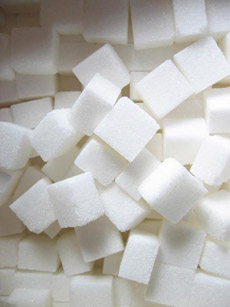
Sugar CubesNo mystery about the white cubed stuff. It’s the dozens of other mysteries in this article that need to be unraveled. Photo of sugar cubes courtesy of MorgueFile.com. Other photos courtesy of Stock.Xchng.
MENU


Diet Nibbles

Main Page
Yummy Things For Foodies
With Restrictions


Product Reviews

Food, Beverages, Books,
News & More


Home Page

Connect to Other Sections:
Newsletter, Marketplace,
Food Fun, Home Zone


ABOUT THE AUTHOR

KAREN HOCHMAN has tried almost everything in this article, and is glad to have the opportunity to put it all down on [digital] paper.


June 2005
Updated October 2006

Product Reviews / Diet Nibbles / Diet Candy

Demystifying Sugar Substitutes

A Guide To Low-Cal & No-Cal Sweeteners


CAPSULE REPORT: Nearly 200 million Americans consume sugar-free or low-calorie products at some point, according to the Calorie Control Council. About half of those are frequent users, consuming an average of four of products every day that contain sugar substitutes, a.k.a. artificial sweeteners, a.k.a. manmade sweeteners. Diet sodas make up 29% of the $70-billion annual U.S. soft drink sales, and the percentage is rising, according to Beverage Digest; other beverages, candy and sweet foods, and even frozen meals contain sugar substitutes. Almost every one has been shown to cause cancer in lab tests, but the data are often flawed. With looming obesity, many people would prefer to take their chances with the non-caloric sweeteners. Here, we provide an overview of nutritive sweeteners, or “real” sugars, and the non-nutritive, artificial sweeteners.

A recent U.S. Department of Agriculture (USDA) survey found that the average American consumes the equivalent of 160 pounds of sugar a year—53 heaping teaspoons of sugar a day. This represents a 30 percent increase in consumption over the early 1980s, and is due in large part to sugar additives in so many prepared and processed foods.

People who are dieting, trying to avoid excess sugar, or needful of avoiding it for medical reasons seek sugar substitutes in both prepared foods and as tabletop sweeteners. A broad portfolio of sweeteners is used in today’s prepared and manufactured foods, including a dozen or more that fall into the category of low-cal or no-cal. With new products brought onto the market regularly, it can be hard to tell the players without a scorecard.

“Sweeteners” includes both “natural” products like cane sugar, honey and molasses, which derive principally from plants or other natural materials; as well as “artificial” sweeteners made through chemical processes, like saccharine, aspartame and sucralose. The former have nutritional value (produce energy when metabolized by the body) and are technically known as nutritive sweeteners. Those produced in the lab are called non-nutritive sweeteners.

Non-nutritive sweeteners were created specifically for their lack of calories. While most of the nutritive sweeteners are as caloric as regular table sugar, one group—the sugar alcohols—is metabolized differently, has significantly lower calories, and is used to create may reduced-calorie foods. We’ll begin by taking a look at the nutritive group.

Nutritive Sweeteners

Nutritive sweeteners include sucrose (table sugar, or granulated sugar, which is made largely from sugar cane or sugar beet, and to a small extent from sorghum and sugar Teamaples), honey, syrups (a large group including barley malt syrup, brown rice syrup, cane syrup, corn syrup, golden syrup, maple syrup, molasses, and sugar beet syrup), and sugar alcohols. Agave is a succulent plant that grows in Mexico; its sap, which tastes a bit like honey, is 90% naturally-occurring fructose that is a low-glycemic alternative for people on a low-glycemic diet.

All nutritive sweeteners, regardless of type, are broken down by the body into simple sugars to be used for energy. The body doesn’t know the difference between granulated sugar, high fructose corn syrup or honey: all will ultimately be broken down to the same simple sugars.

Sweeteners vary in consistency, color, and intensity of sweetness. The type of sweetener added to a food product depends on the best match for the purpose. Granulated sugar and brown sugar are better for cooking and baking, while high fructose corn syrup is more cost-effective in commercial food product applications like soft drinks.

The following are commonly added caloric sweeteners that can be found on product labels:

  • Agave
  • Concentrated Fruit
    Juices (e.g. Grape
    Juice, Apple Juice)
  • Confectioner’s (Powdered) Sugar
  • Corn Sweetener
    (Corn Syrup)
  • Dextrose
  • Erythritol
  • Fructose Or
    Crystalline Fructose
    (Fruit Sugar)
  • Glucose (Grape
    Sugar)
  • High Fructose
    Corn Syrup
  • Honey
  • Invert sugar
  • Lactose
  • Maltose
  • Maple Syrup
  • Molasses
  • Refined Sugar
  • Sucrose (Refined
    Sugar)
  • Tagatose
  • Turbinado Sugar
    (“Sugar In The Raw”)

These sugars vary widely in their flavor, degree of sweetness and glycemic value. Agave, fructose and some honeys, e.g., are lower glycemic sugars and can be tolerated by some diabetics (plus, honey is sweeter than sugar so less is needed). If you’d like to find a more “beneficial” form of sugar for regular use, consult your healthcare professional.
Sweeteners That Must Be Called Dietary Supplements

Two excellent sweeteners are little known because they are currently labeled dietary supplements, not food additives, by the FDA. The dietary supplement category is not Grapefruitsubject to FDA food additive regulations. This means that these products cannot state or even suggest, on package labels or in advertising materials, that they can be used as sweetening agents (i.e., food additives); and manufacturers will not incorporate them into products. Consumers, however, can buy them at most health food and natural products stores, and use them to sweeten their own foods and beverages. Both also are very stable under high temperatures and thus are excellent for cooking and baking. And both have been used to sweeten foods in other countries for many centuries.

  • Stevia (pronounced STEH-vee-yuh) is a natural sweetener derived from a South American plant (Stevia rebaudiana) related to the chrysanthemum. One reason given for its lack of approval of a food additive is heavy lobbying by the makers of Nutrasweet®, which would stand to lose market share. Quality stevia is a nice, light, calorie-free sweetener. Lesser quality stevia has a slight anise (licorice) flavor which some people might enjoy; it blends well into soft drinks and iced tea. Although it won’t be appearing on food and beverage labels in the U.S. for the time being, stevia comprises forty percent of the sweetener market in Japan. It can be purchased in crushed leaf form (which is about 30 times as sweet as table sugar, measure for measure), as a greenish-black concentrated liquid (about 70 times as sweet), and in powder form (about 300 times as sweet).
  • First discovered in 1932 by a Western botanist in China, and relatively new on the horizon as a sugar substitute in the U.S., lo han kuo (also spelled lo han guo and kuo han kuo) is 200 to 250 times as sweet as table sugar. A natural sweetener made from the extract of a fruit by the same name, it has been used in China and neighboring countries for generations. Though almost non-caloric (2 calories per 2 grams, a normal serving portion), it has a pleasant, natural sweetness and a low glycemic index, making it appropriate for diabetics. It can be found mixed with xylitol, a sugar alcohol (see below), to achieve the most natural taste in foods.

Both stevia and lo han kuo are sold in liquid and powder forms.

Sugar Alcohols

Sugar alcohols occur naturally in fruits and vegetables. They have calories, though significantly fewer calories than regular sugars because they are not completely absorbed by the body. This allows products that use sugar alcohols for sweeteners to be labeled “sugar-free” or “reduced-calorie.” (Sugar-free does not mean calorie-free.) As a group, the sugar alcohols are not as sweet as sucrose (table sugar), but also they are less caloric than sucrose. They do not brown when heated (caramelize).

Because the body absorbs sugar alcohols slowly and incompletely, they produce a lower iced coffeeblood glucose response and are appropriate for diabetics. In addition, because bacteria in the mouth cannot metabolize sugar alcohols as rapidly as sugar, sugar alcohols do not contribute to tooth decay. However, ingesting large amounts can cause gas, abdominal discomfort and/or diarrhea due to fermentation by intestinal bacteria (similar to lactose intolerance). For this reason, food products containing sugar alcohols are labeled, “Excess consumption may have a laxative effect.” The FDA classifies sugar alcohols as "generally recognized as safe" (GRAS), and they are approved as food additives.

The group of sugar alcohols includes the following, along with their associated calories/gram (sugar has 4 calories/gram):

  • Erythritol (0.2)
  • Glycerol (N/A)
  • HSH [Hydrogenated Starch
    Hydrolsates] (3.0)
  • Isomalt (2.0)
  • Lactitol (2.0)
  • Maltitol (2.1)
  • Mannitol (1.6)
  • Sorbitol (2.6)
  • Xylitol (2.4)

As with the other nutritive sweeteners like table sugar, brown sugar, honey, and syrups, different sugar alcohols work better in different applications. Expense of production also impacts a manufacturer’s decision to use one over another.

Sugar Labeling

Most people have become astute label readers and know that the label “No Refined Sugars” simply means that a different form of sugar—such as honey, molasses or apple juice—has been used to sweeten a product. The sugars are metabolized similarly by the body. A product that is sweetened only with fruit juice may have lower calories, but it won’t be nearly as sweet as a product sweetened with sugar or honey.

“Sugar-Free” and “No Sugar Added” are not the same.

  • No Sugar Added foods have no form of sugar added during processing or packaging. They do not contain any high-sugar ingredients. Any particular No Sugar Added product may, however, still be high in carbohydrates from other ingredients; so check the label if that is your concern.
Cookie
  • Sugar-Free foods should contain no sugar whatsoever. Since there are trace amounts of sugar in fruits and milk, e.g., products that contain them them might be labeled No Sugar Added, but they technically could call themselves Sugar-Free. USDA guidelines give manufacturers the right to call products Sugar-Free if the natural sugar level is below a certain threshold; but some prefer not to use that claim and go with No Sugar Added.

And now on to the second major category, the “artificial” sugars.

Non-Nutritive Sweeteners

According to the Calorie Control Council, this year, about 180 million adult Americans—more than half the adult population—will consume low-calorie, sugar-free foods and beverages. With the exception of products derived from sugar alcohols, they will use the non-nutritive sweeteners.

Non-nutritive sweeteners, also referred to as artificial sweeteners, do not provide the body with energy. They are chemicals that offer the sweetness of sugar without the calories. Because they are are much sweeter than sugar, it takes a tiny amount of them quantity of them to create the same sweetness. In fact, packets of Equal® and Splenda®, which are branded forms of the chemical compounds aspartame and sucralose, are padded out with fillers because only a few grains of the chemical are needed to sweeten the product.

How Safe Are They? Artificial sweeteners are often the subject of alarming stories in the media, claiming that they cause a variety of health problems, including cancer. According to the National Cancer Institute, however, there's no scientific evidence that any of the FDA-approved artificial sweeteners causes cancer. However, aspartame isn’t safe for people who have the rare hereditary disease phenylketonuria (PKU). Products that contain aspartame carry a PKU warning on the label.

Artificial sweeteners include:

  • Acesulfame potassium
    (acesulfame-K or Ace-K,
    marketed as Sunett, Sweet
    One)*‡
  • Alitame (marketed as Aclame®)†
  • Aspartame (marketed as Equal,
    Nutrasweet and NatraTaste)*‡
  • Cyclamate†
  • Glycyrrhizin
  • Neotame*
  • Saccharin (marketed as Sweet ‘N Low, Sugar Twin)*‡
  • Sucralose (marketed as
    Splenda)*‡


*FDA-approved
†Application pending for FDA approval
‡Branded product mixed with dextrose and maltodextrIn

Ace-K, aspartame, neotame and saccharine, and sucralose are FDA-approved. Alitame and cyclamate have filed for, and are awaiting, FDA approval to be sold in the U.S. They are in use elsewhere throughout the world.

When non-nutritive sweeteners like aspartame, saccharin and sucralose are turned into products for consumer use, they are mixed with dextrose and Chocolate coffee beansmaltodextrin—nutritive sugars—as bulking agents. Otherwise, the amount of actual aspartame or sucralose that a consumer would use would amount to a few grains—not enough to “portion out.” As you will note when you open an individual paper packet of sweetener, the contents are still rather meager. When you see the relative ratios of sweetness in the glossary below, you’ll know why so few grains of artificial sweetener are needed.

Glossary Of Natural & Artificial Sweeteners

**Indicates a natural product, i.e., one derived principally from a plant or other natural product

ACESULFAME-K or ACE-K (Sunett®, Sweet One®)

Acesulfame-K, measure for measure 200 times sweeter than table sugar, is, along with sucralose, one of the more recently approved sugar substitutes. Ace-K was approved for use in soft drinks in 1998, and as a flavor enhancer in 2003. It contains no calories. Because it is such an intense sweetener, only small amounts are usually needed; it is often combined with other sweeteners to intensify the sweet taste and reduce any bitterness. The sucralose (Splenda)/Ace-K blend has become a popular ingredient in baked goods because of the natural taste and its ability to retain sweetness when heated to high temperatures. Humans cannot digest acesulfame-K so no calories are absorbed. It can withstand high temperatures and thus can be used in cooking and baking. It has been tested less thoroughly than aspartame, so researchers tend to know less about it. It is O.K. for cooking. The FDA Acceptable Daily Intake is 15 mg per kg, or 25 cans of diet soda.†† Critics claim that approval of Ace-K was based on poorly designed studies, flawed data and questionable interpretation of statistics. the FDA has turned down proposals to further test Ace-K, as well as aspartame, and other sweeteners.

AgaveAGAVE SYRUP or AGAVE NECTAR

Agave (pronounced uh-GAH-vay) is a species of succulent plant that grows chiefly in Mexico and surrounding countries. The sap or juice of the leaves is about 90% fructose. Unlike the crystalline form of fructose, which is refined primarily from corn, agave syrup is fructose in its natural form, i.e. unprocessed. Some varieties are fermented and distilled into mezcal and tequila. See also Fructose.
Photo of blue agave, from which both tequila and agave nectar are made. The nectar is available from BlueAgaveNectar.com.

ASPARTAME (Equal®)

Approved in 1981 by the FDA, aspartame is measure for measure 160 to 200 times sweeter than sugar. It contains the two amino acids, phenylalanine and aspartic acid, and is an excellent sweetener with no aftertaste. It has about 4 calories per gram, but because of its intense sweetness, very little is used so the amount of calories it provides is negligible. Aspartame has a tendency to break down when heated, but newer forms of the sweetener have made it more heat-stable and suitable for cooking and baking. However, aspartame when in a prepared food or beverage, aspartame has a relatively short shelf life: the sweetness will dissipate, which is why a can of diet soda that’s a year old can taste undrinkable. Aspartame contains phenylalanine, an amino acid, which some people with a rare condition called phenylketonuria (PKU) are unable to metabolize; so all food products containing aspartame carry a warning about its phenylalanine content. Aspartame breaks down under heat so cannot be used in cooking. The FDA Acceptable Daily Intake is 50 mg per kg of body weight, or 15-20 cans of diet soda, or 97 packets of Equal, for a 150-pound person.†† It is deemed safe by the World Health Organization and the Centers for Disease Control and Prevention.

CYCLAMATE

Cyclamate, which used to be in the U.S. versions of Tab and Fresca, has been banned in the U.S. since the 1970, after studies showed a link to bladder cancer in rodents. Many believe the research to be flawed; cyclamate is legal in Canada and in dozens of other countries and is found in Canadian Sweet‘N Low instead of saccharin, while saccharin is banned in Canada. The FDA is reconsidering the approval of cyclamate.

ERYTHRITOL (SweetSimplicity, ZSweet)**

Erythritol is a natural sweetener that has been made for some time, but not in enough quantity to be marketed to consumers. Its components are recognized as safe by the Food and Drug Administration. Like maltitol, it is a polyol (sugar alcohol) and belongs to a group of carbohydrate-based sweeteners. It is a white crystalline powder with a clean, sweet taste that is similar to sucrose. Erythritol is naturally present in such fruits as grapes and melons, in mushrooms and in fermented foods such as wine, soy sauce and cheese. Unlike maltitol, it does not have a laxative effect. Like maltitol, it is also much pricier than aspartame, sucralose and other sugar substitutes. At just .2 calories per gram, it is considered calorie-free by the FDA.

FRUCTOSE**

Fructose, along with glucose, is a component of sucrose (table sugar). It is often referred to as fruit sugar because of its presence in fruits. Fructose is also added to foods and beverages in the form of crystalline fructose (made from corn starch) or high fructose corn syrup (HFCS), which is another combination of fructose and glucose. Like sucrose, fructose provides four calories per gram, 16 calories per teaspoon; but it has a low glycemic value. Fructose is sweeter than table sugar, so less is needed as a sweetener.

GLYCEMIC INDEX

Introduced in 1981, the Glycemic Index (GI) is a system that measures the effect of carbohydrates on blood glucose. Carbohydrates that are rapidly digested and absorbed have a high glycemic index; those that are absorbed and digested slowly have a low glycemic index.

HIGH FRUCTOSE CORN SYRUP (HFCS)**

High fructose corn syrup (HFCS) is a modified form of corn syrup that has an increased level of fructose. A process developed by Japanese researchers in the 1970s can increase the fructose content of corn syrup to 42%, 55%, or 90%. Because fructose is much sweeter than glucose, the overall sweetness of the syrup is increased and it becomes a more cost-effective than sugar in food processing. Until the 1970s most of the sugar in foods came from sucrose derived from sugar beets or sugar cane, which were 50/50 fructose and glucose. Some nutritionists say that HFCS should be avoided due to its possible links with obesity and diabetes. Also cited as reasons to avoid HFCS are that it is highly refined, that it might be produced from genetically modified corn, that various molds found on corn might leave harmful byproducts in the final product, or that corn products in general should be avoided. Other nutritionists say that HFCS is no more or less harmful than other forms of sugar and that all sugars should be consumed sparingly.

ISOMALT**

A sugar alcohol that is widely used in sugar-free hard candies, chewing gums and some chocolate. It contains half the sugar and has a low GI response.

LO HAN KUO**

A natural sweetener made from the extract of a fruit by the same name, lo han kuo (also spelled lo han guo and luo han kuo) has been used in China and Southeast Asia for generations. It is 200 to 250 times as sweet as table sugar. A low glycemic index makes it appropriate for diabetics. It is very stable under high temperature and thus suitable for cooking and baking. It is currently labeled a dietary supplement by the FDA.

LOW-CALORIE SWEETENERS

Low-calorie sweeteners provide a sweet taste with few or no accompanying calories. Before being approved by the FDA for use in the United States, sweeteners must undergo extensive safety testing. All FDA-approved low-calorie sweeteners meet the same standard of safety and are safe for consumption by pregnant women and children. Six low-calorie sweeteners currently are approved for use in the United States: acesulfame potassium (Ace-K), aspartame, neotame, saccharin, sucralose, and tagatose. The FDA is considering petitions to approve alitame and cyclamate, both of which have been approved for use in numerous other countries.

MALTITOL**

Maltitol is a polyol (sugar alcohol) made by hydrogenation of maltose obtained from starch. Maltitol has approximately 90% of the sweetness of sugar but just half the calories—2.1 calories per gram as opposed to 4.0 calories per gram for sugar (i.e., it reduces calories by 12% to 15%). Its high sweetness allows it to be used without being mixed with other sweeteners. It gives creamy texture to food, so it can be also used to replace fat. It works especially well in the production of sugarless sweets: chocolates, hard candies, baked goods, confections and ice cream. High-end manufacturers also use it in chewing gum, but because it is a more costly product, many domestic manufacturers use other sweeteners. Maltitol is also known under its trade names Maltisorb® and Maltisweet®. It is considered to be the best substitute for sucrose.

MANNITOL**

A sugar alcohol used in chewing gums and mints.

NEOTAME

Neotame is a non-caloric sweetener and flavor enhancer with a clean, sweet, sugar-like taste, granted approval by FDA in 2002. It is the sweetest of all products, measure for measure about 8,000 times sweeter than sugar. Neotame is a synthetic derivative of a combination of aspartic acid and phenylalanine—the same two amino acids that are used to make aspartame. It is more stable than aspartame for cooking and baking. Unlike aspartame, neotame isn’t broken down in the body into the amino acid phenylalanine, which is toxic to people with the phenylketonuria (PKU). It is rapidly metabolized and completely eliminated. The FDA Acceptable Daily Intake is 18 mg per kg.†† As of this writing, there are no consumer products available in the U.S., due to the recency of neotame’s FDA approval.

POLYOLS**

Sugar alcohols, a group of sugar-free sweeteners. See Sugar Alcohols, below.

REBIANA**

A compound in the leaves of the stevia plant. In July 2007, Coca-Cola and Cargill corporations announced that they had been jointly developing a new low-calorie sweetener, with the working name Rebiana. See also Stevia.

SACCHARINE (Sweet ‘N Low)

Saccharine was discovered in 1879 by a Johns Hopkins University chemist—he accidentally spilled a substance on his hand and noticed the sweet taste while eating dinner. It has been available worldwide since the end of the 19th century; its popularity grew during the sugar shortages of World War I. Saccharine is 300 times sweeter than sugar and is very stable in foods, but has a bitter aftertaste. The human body is unable to metabolize saccharin, is why it has virtually no calories. Saccharine can be used in cooking. Sweet‘N Low, which is powdered, branded saccharine, was launched in 1957, and was immediately preferred to the tiny tablets that preceded it for its superior dissolvability. In the 1970s, lab experiments feeding rats enormous amounts of cancer produced tumors, and a scare that saccharine was carcinogenic. Today, the National Cancer Institute gives it a clean bill of health for humans, however it is banned in Canada (Canadian Sweet ‘N Low has cyclamate, which is banned in the U.S.). The FDA Acceptable Daily Intake is 5 mg per kg, or 8.5 packets of sweetener.*

STEVIA**

Stevia, which is 150 to 400 times sweeter than sugar, is derived from a South American herb called Stevia rebaudiana. It has been used for centuries in Paraguay and Brazil to sweeten yerba mate and medicinal teas. It is almost calorie-free, does not cause cavities, and does not trigger a rise in blood sugar. Stevia accounts for 40% of the sweetener market in Japan. In the U.S. it is currently classified as a dietary supplement and not as a food additive. It is usually found in a liquid concentrate, but there are also packets and tablets. Lesser-quality stevia can have a subtle anise or licorice flavor, but this does not occur with the better-quality products.

SUCRALOSE (Splenda)

Sucralose, 600 times sweeter than sugar, was approved by the FDA and came onto the market in 1998. It is the only artificial sweetener made from sugar: It begins as sucrose, but is then chemically altered, including the addition of a chlorine atom. Sucralose passes through the body without being digested (it is only partially metabolized by the body). It has also been recently approved for use as a sweetener. Sucralose is heat-stable and can be used for cooking and baking; it also has a longer shelf life (aspartame breaks down in a year when used in soft drinks). Sucralose is not utilized for energy in the body because it is not broken down like sucrose. It passes rapidly through the body virtually unchanged. Sucralose tastes like sugar. It has a clean, quickly perceptible, sweet taste that does not leave an unpleasant aftertaste. The exceptional stability of sucralose allows both food manufacturers and consumers to use it virtually anywhere sugar is used, including cooking and baking. The FDA Acceptable Daily Intake is 5 mg per kg, or 5 cans of diet soda.††

SUCROMALT

Xtend Sucromalt is a product of Cargill Corporation, derived from sucrose and maltose. It is 60% to 70% as sweet as sugar and behaves like corn syrup, with a slow carbohydrate release.

SUCROSE**

Sucrose—commonly referred to as table sugar—is a disaccharide comprising glucose and fructose. It is derived from sugar cane or sugar beets, and has four calories per gram (about 16 calories per teaspoon). The refining process removes impurities from the sugar plant, producing the white crystals we know as table sugar. Molasses is simply a less refined sucrose.

SUGAR ALCOHOLS**

Sugar alcohols (also known as polyols, polyhydric alcohols, or polyalcohols) are a hydrogenated form of carbohydrate. They are commonly used for replacing sucrose in foodstuffs, often in combination with high intensity artificial sweeteners to counter the low sweetness. They occur naturally in a wide variety of fruits and vegetables; but can be commercially made from other carbohydrates such as sucrose, glucose, and starch. Sugar alcohols include erythritol, isomalt, maltitol, mannitol, sorbitol, and xylitol.

TAGATOSE**

A new entry, tagatose is a low-calorie sweetener derived from lactose, which occurs naturally in some dairy products and other foods. It is very similar in shape and texture to sucrose (table sugar) and is 92% as sweet, but with only 38% of the calories. Since it is metabolized differently from sucrose, tagatose has a minimal effect on blood glucose and insulin levels. In the mid-1990’s tagatose was been approved by the FDA use in foods and beverages but has not yet been brought to market. Legal action was taken by the American license-holder against the company that acquired the rights to produce the product, and hopefully a product will come to market soon.

XYLITOL**

A natural sweetener derived from fruits and vegetables (e.g. birch bark, plums and corn cob). A sugar alcohol, pure xylitol is a white, crystalline, natural substance that looks and tastes like sugar. Its sweetness is equal to sugar, but it contains 40% fewer calories. It does not require insulin to be metabolized, so it can be used by diabetics. It reduces tooth decay, has been endorsed by dental associations,and is used extensively in sugar-free chewing gums and hard candies.

††FDA-established acceptable daily intake (ADI) limit per kilogram (2.2 pounds) of body weight. Product consumption equivalent for a 150-pound person.

How Much is Too Much?

All FDA-approved artificial sweeteners—acesulfame-K or Ace-K (Sunett®, aspartame (Nutrasweet®, Equal®), neotame, saccharine (Sweet ‘N Low®), sucralose (Splenda®), and tagatose—are considered safe in moderate doses.

To guide consumers, the FDA sets an Acceptable Daily Intake (ADI) for anything that is added to foods. For sweeteners, the ADI is 3400 milligrams. In the case of aspartame, for a 150-pound adult the maximum would be:

  • 15 diet sodas (a 12-ounce can of diet soda contains about 225 milligrams of aspartame)
  • 85 packets of Equal® (each packet has about 40 milligrams of aspartame)

Thus, most people are safely within the level of tolerance. If you are at the point of tipping beyond 15 diet sodas a day, you aren’t drinking your eight glasses of water—also critical to a successful diet.

Soda


Recent Articles From Our Diet Nibbles News Feed:

Subscribing notifies you whenever there are
new additions to the Diet Nibbles section.


Subscribe to THE NIBBLE™ Diet Nibbles by Email


© Copyright 2005- 2008 Lifestyle Direct, Inc. All rights reserved. Images are the copyright of their respective owners.


.