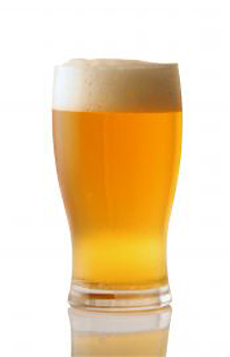
A frosty glass of Pilsener beer. Photo by Engin Deniz | SXC.
February 2005
Last Updated July 2014
|
|
Beer Glossary: Every Type Of Beer
Page 6: Beer Types ~ N To P
This is Page 6 of an eight-page glossary with every type of beer. Click on the black links below to visit other pages. Also see our many other food glossaries, chock-full of information about your favorite foods.
This glossary is protected by copyright and cannot be reproduced in whole or part.
You are welcome to link to it.
OKTOBERFEST BEER
Oktoberfest-style beer is traditionally the first beer of the brewing season in Germany: the Beaujolais Nouveau of Germany, as it were. It is a Märzen-style beer: a lager that is amber in color, smooth and malty and about 6% or higher ABV. To be labeled Oktoberfest beer in Germany, a beer must conform to the Reinheitsgebot (the German beer purity law), which dictates a minimum of 6% alcohol (by comparison, America’s Budweiser has 5%). The beer must also be brewed within the city limits of Munich. Oktoberfest beer is typically enjoyed with a variety of traditional German foods (see the list and more about the Oktoberfest celebration).
OLD ALE
In the U.K., this term refers to a medium-strong dark ale. In Australia, “Old” simply means dark ale.
OYSTER STOUT
Stout is a popular pairing oysters on the half shell. Some brewers, such as Marston’s, use the term “oyster stout” on the label just to connote that. However, other brewers actually have been known throw a handful of oysters into the brewing process. It’s a gimmicky; there aren’t enough oysters to influence the flavor. According to Michael Jackson’s World Beer Hunter, the first known use of real oysters in the brew was 1929 in New Zealand.
|
PALE ALE
A bronze- or copper-colored ale, as opposed to dark brown ale. Some English brewers use this term to describe their premium bitters. The style gradually evolved in the English town of Burton-upon-Trent, which was known for its distinctive hard water and propensity to brew a lighter colored beer than was common at the time. Pale ale should be paired with big, robust flavors like those of red meats and strong cheeses. See also India Pale Ale (IPA).
PILSNER or PILSENER or PILS
A general name for a crisp, golden-hued, highly-hopped, bottom-fermented lager; Pilsners are a fairly dry style of beer with a strong malt flavor. Pilsner is the most popular lager in the world today. The original Pilsner was first brewed at the Bürgerlisches Brauhaus in the Bohemian town of Plzen (meaning green meadow), Czechoslovakia in 1842, using a special yeast smuggled from Germany by a Czech monk. Until then, all beers were dark and cloudy.
|
|
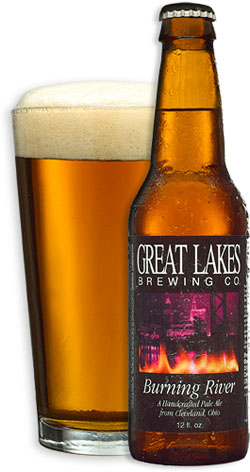
Pale ale. Photo courtesy Great Lakes Brewing Co. |
The new Czech Pilsner was the first beer to be brewed clear and golden, the the palest beer to date (and soon to be copied worldwide). The archetypal Pilsner is Plzensky Prazdroj or Pilsner Urquell (urquell meaning original source), a name trademarked in 1898. Pilsners are medium to medium-full bodied lagers that are characterized by a dense, white head, high carbonation, floral aroma and a bitter finish (from the Czech hops used). Pilsners pair well with grilled, mild sausages and mild to moderate cheeses.
|
PORTER
A London style of beer, porter is a strong, dark ale, bottom-fermented with the addition of roasted malt to give flavor and color. Porter was named after the porters who hauled goods from wagons to the stands in the open air markets common to England in earlier times. Porter originally was a blend of stout and pale ale; it is higher in alcohol and more roasted-tasting than ale, lighter-bodied than stout, full-bodied, but not overpowering. Today most porters are reddish in color, slightly sweet, very malty, but not bitter. Baltic porter, brewed in the Baltic Sea countries of Denmark, Estonia, Finland, Latvia, Lithuania, Poland, Russia and Sweden. is brewed with an even higher alcohol content than standard porters. Porter can be paired with a hearty cheese and a spicy Italian or Andouille sausage, as well as other roasty and smoked flavors like barbecued ribs and steak. Also try it with oysters and chocolate desserts.
|
|
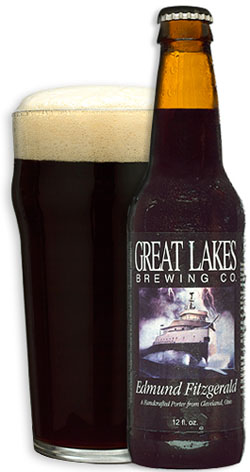
Photo of porter courtesy of Great Lakes Brewing Co.
|
PREMIUM BEER
“Premium” is a term used by breweries to describe their top-of-the-line offerings, made from the best ingredients. It doesn’t describe a style of beer, or even mean that the beer is of superior quality. There is no FDA regulation of the term, so it would behoove any brewer to call its beer “premium” as a marketing advantage (similar to putting the word “gourmet” on a product label—gourmet mustard, e.g.). Beer connoisseurs would prefer a “microbrew” or “craft beer” from artisan brewers that only make premium beers, as opposed to a mass-marketing giant selling a “premium” beer.
Continue To Page 7: Terms Beginning With Q To S
Go To Article Index Above
Some terms in this glossary are © 2005 National Beer Wholesalers Association. All rights reserved. Other content is © Lifestyle Direct Inc. All rights reserved.
|