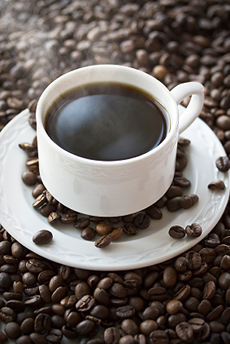
Have a fresh cup! Photo by Ermek | IST.
July 2005
Last Updated December 2025
|
 |
Coffee Glossary
Page 5: Coffee Terms & Definitions J To Q
Study these terms, and you’ll have a much greater appreciation of that next sip of coffee. Practice the language of coffee by using these terms to describe each cup you drink. Soon, they’ll become natural to you—and you’ll be able to educate others. This is Page 5 of a six-page Coffee Glossary. For terms specific to espresso, see our separate Espresso Glossary. We have many food glossaries, covering your other favorite foods.
Click on a letter to go to the appropriate glossary page:
a b c d e f g h i j k l m n o p q r s t u v w x y z
This glossary is protected by copyright and cannot be reproduced in whole or in part.
JAVA
An island of Indonesia that is a big producer of coffee, and gave its name to a generic cup of coffee.
JOE or CUP OF JOE
Named after Admiral Josephus “Joe” Daniels, Chief of Naval Operations, who outlawed alcohol on board ships and ordered coffee as the beverage of service. The term “Cup of Joe” followed, and because sailors wanted their cup “hot,” Hot Joe was shortened to “Hojo.”
|
JUICY
A mouth-watering quality that’s used to describe coffees that make one want to salivate.
KAHLÚA COFFEE
An after-dinner drink made by mixing one or two tablespoons of Kahlúa liqueur into a cup of strong coffee, which is topped with whipped cream and then sprinkled with grated orange zest or garnished with a plain or chocolate-covered coffee bean. A White Russian is made with two parts Kahlúa and one part vodka, topped with cream.
|
|
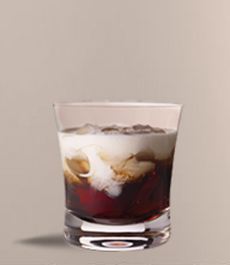
A White Russian cocktail. Photo courtesy Kahlua.com. Find more cocktail recipes. |
|
K-CUP
A plastic cup of coffee, used with single-serve coffee machines. The term is named after Keurig, the coffee machine manufacturer that first introduced the K-Cup. The concept is now produced by a variety of manufacturers.
KENYA
Along with coffee from Tanzania, Kenya coffee is rated by the International Coffee Organization as Africa’s finest. With body, brightness, and flavor in perfect balance, it offers everything plus just a hint of East African distinctiveness that sets it apart from Western Hemisphere coffees.
|
|
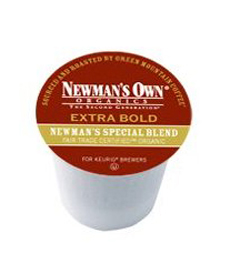
A K-cup of Newman’s Own coffee, made for the Keurig system |
KONA COFEE
One of the most highly-regarded coffees in the world, grown on the southwest coast of the Big Island of Hawaii. Aromatic and medium-bodied with a sweet flavor and mild acidity.
LATTE
See caffe latte.
MACCHIATO
An espresso-based drink with a small amount of foam on top—somewhere between a cappuccino and a doppio.
MANUAL DRIP BREWING
See pour-over.
MELLOW or MILD
Balanced coffee, implying low or medium acidity and soft flavor characteristics.
METHYL CHLORIDE
The main chemical in the traditional or European decaffeination method, wherein the beans are soaked in water, the caffeine is extracted from the water, and the water is reunited with the decaffeinated beans to add back flavor. Methyl chloride is added to the extracted water to bond with the caffeine molecules, leaving more of the coffee flavor in the water. Less than trace amounts of the chemical remain in the beans, which is the acceptable limit by the FDA. Most decaf coffees are processed by this method; those that are processed with no chemicals are called Swiss Water Process or “Naturally Decaffeinated,” which uses a bonding chemical called ethyl acetate, which is extracted from decaying organic matter.
|
MICROFOAM
Microfoam is created by the steam wand of a professional cappuccino machine, used to foam a pitcher of milk. The combination of the crema atop the cup of espresso and the velvety microfoam allows patterns to be made with foam (barista art). Other types of mill steamers and foamers do not create the tiny bubbles required for microfoam.
MICROWAVE BREWER
A coffee brewer that makes coffee in a microwave oven.
MOCHA
The mocha is a chocolate espresso drink made with both steamed milk and foam.
|
|

Microfoam has tiny bubbles that enable the creation of artistic designs. Photo courtesy HiLine Coffee Co. |
MOKA or MOCHA
A small irregular bean, olive green in color, with a unique acid character. Native to Yemen and shipped from the port of Moka, which gave it its name.
MOKA JAVA
A popular blend of two well-known coffee varieties: combining the sharp, winey/fruity flavor of Moka beans from Ethiopia and the rich, deep-toned body of Java beans. Moka, or Mukha, is a seaport on the Red Sea in the Republic of Yemen through which much of the early coffee trade flowed.
|
MOKA POT
The classic Italian stovetop espresso maker is claimed to be the most copied coffee maker in the world. Water goes into the base, and ground coffee sits in a metal filter cup on top of the base. The pot is put on top of the stove, and boiling water goes through the coffee in the base and into the top section, from which it is poured. The Moka Pot comes in sizes from 4 cups to 12 cups, and from the “original” design to sleek and stylized designs. All function in the same way.
MOLDY
The unpleasant aroma, without visual representation, of mold.
|
|
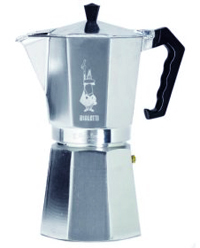 Get more information on this classic Bialetti Moka Pot, a stovetop espresso maker. Get more information on this classic Bialetti Moka Pot, a stovetop espresso maker. |
MOUTHFEEL
Refers to how a coffee feels in the mouth: thin, full, round, etc.
MUSTY
The smell of mold or mildew. A negative flavor often results from overheating or a lack of proper drying.
NATURALLY DECAFFEINATED
See methyl chloride.
NEUTRAL
A flavor characteristic that is seen as desirable by some, yielding no predominant flavors; it’s the goal of a “generic” blended coffee.
|
NITRO COFFEE
Nitro coffee (short for nitrogen-infused cold brew coffee) is a style of coffee that’s made by infusing cold brew with nitrogen gas. An offering of specialty coffee shops, it’s typically served on tap like beer. Also, like beer, some brands are sold in cans in grocery stores.
The nitrogen gives the cold brew a creamy texture, natural sweetness, and a foamy head similar to a stout beer like Guinness. A smooth, creamy mouthfeel is achieved without the need for milk or cream.
Nitro is served cold without ice because the ice would disrupt the foamy texture.
“White nitro” typically indicates that the cold brew is served with milk/cream or plant milk, sometimes floated on top, and sometimes mixed together like a latte.
You can make a nitro at home using a whipped-cream siphon charged with pure nitrogen (N₂) cartridges. The regular whipped cream chargers are nitrous oxide (N₂O), which will give you a sweeter drink and a different texture, so use the N₂ cartridges labeled for coffee.
Who invented nitro?
Nitro coffee emerged in multiple locations around 2012–2013. Cuvée Coffee and Stumptown are the two most-cited pioneers.
Cuvée Coffee in Austin, Texas, says that founder Mike McKim began R&D in 2011 and served the first nitro cold brew publicly in the summer of 2012, subsequently canning it in 2014–2015.
Stumptown Coffee Roasters of Portland, Oregon, credits food scientist Nate Armbrust, who developed the process in early 2013, served it on tap in June 2013, and canned it in 2015.
NUTTY
Having a roasted or fresh nut aroma. Generally, a good quality, although a peanutty aroma is generally the result of poor varietal character or a blending of lower-grown coffees.
OILY
Having a specific petroleum taste, which is the result of improperly treated storage bags.
|
|
 You can make nitro at home with a “keg” like this, or even with a whipped cream aerator (photo © Zulay). You can make nitro at home with a “keg” like this, or even with a whipped cream aerator (photo © Zulay).

A white nitro has added milk (photo © Dannie Sorum | Unsplash.

If you already have a whipped cream aerator, you can use it to make nitro with nitrogen capsules specific to coffee. Or you can purchase a device like this (photo © Nitro Kafo).
|
|
OAXACAN COFFEE
The after-dinner coffee has smoky notes from adding agave-based joven (young) mezcal to freshly brewed coffee. It’s sweetened with sugar syrup and a dash of regular or chocolate bitters. This after-dinner coffee, great for chilly weather, tastes even better with a topping of whipped cream.
Instead of dessert, serve Oaxacan coffee with chocolate truffles or bonbons.
A contemporary craft cocktail creation, it’s similar to Irish Coffee but with mezcal instead of whiskey.
|
|
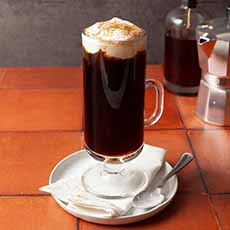 Oaxacan coffee. Here’s a recipe (photo © Taste Of Home). Oaxacan coffee. Here’s a recipe (photo © Taste Of Home). |
The region of Oaxaca has been producing coffee since the 17th century. Mezcal is another local product, along with mole and Mexican chocolate.
 ORGANIC COFFEE ORGANIC COFFEE
Coffee that’s grown under the standards of the USDA Organic Certification program, without pesticides, and under environmentally sustainable circumstances. It will bear the green and white USDA Organic seal. Learn more about organic certification.
PAST CROP
A negative characteristic of green coffee that has been sitting in the warehouse too long and has gone over the hill, acquiring a woody taste.
PEABERRY
A coffee bean that is round rather than flat, coming from a coffee cherry that contains only one seed instead of the usual flat-sided pair. This happens when one of the seeds fails to grow, and the other assumes a round shape—about 5% of arabica beans. Under normal conditions, a coffee cherry has two seeds, which will be processed to become coffee beans. But sometimes, the cherries will produce only one bean, a peaberry. The peaberry, which is slightly smaller than a normal coffee bean, has a more concentrated flavor.
POD
A self-contained serving unit of pre-ground coffee, either of filter paper or plastic, depending on the unit, that generally makes one serving (plastic cups are generally called K-Cups). The original pods were created by Illy, and many pods are based on E.S.E. (Easy Serving Espresso)specifications. However, there is profit to be made in the continuing need to buy pod refills, and since the beginning of the century, major manufacturers have launched pod brewers that require proprietary pods or cups that are not interchangeable among manufacturers. Today, pods are available in many roasts and flavors of coffee.
|
POUR OVER or MANUAL DRIP BREWING
Long called the “drip method,” this fashionable new term uses the original low-tech method. Ground coffee is added to a ceramic or plastic cone that sits in a paper filter atop a cup or other receptacle (ceramic pots, glass carafes, etc., can be used, though usually with a larger cone than a single-serving cup).
The technique was invented by Melitta Benz in 1908 to remove the grittiness and murkiness of coffee as it was then prepared. She devised a paper filter and set it into a brass cup, into which she punched holes.
|
|

You can do your own pour-overs with this cone and mug set from Melitta. It is also available with a travel mug instead of a cup. Photo © EspressoParts.com. |
PROCESSING
The act of removing the coffee cherry pulp from the seeds. Coffee cherries are either sun-dried and milled or fermented and pulped.
Continue To The Next Page, Terms R To Z
Return To Article Index Above
Lifestyle Direct, Inc. All rights reserved. Images are the copyright of their respective owners.
|
|
|
|