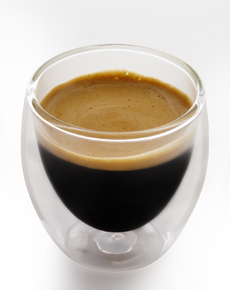
 For many people, there’s nothing better than a shot of espresso with a thick crema. Photo courtesy Coffee Bean Tea Leaf. For many people, there’s nothing better than a shot of espresso with a thick crema. Photo courtesy Coffee Bean Tea Leaf.
October 2006
Last Updated February 2012
|
|
Expressly Espresso
Hot Facts About Coffee’s Strongest Brew
CAPSPULE REPORT: Espresso is a lot of flavor and complexity in a very small cup. Yet, as strong as it is, espresso has no more caffeine than regular coffee. This is Page I of a four-part article. Click on the black links below to visit other pages. We start on this page with an overview of the origins of espresso.
There are many coffee-lovers, but espresso-lovers are a breed unto themselves. That one ounce cup (or a doppio, a double) provides an intense aroma and flavor experience, but no calories.
History
The method of coffee preparation that we call espresso originated at the end of the 19th century. The first espresso machine was presented at the Universal Exposition in Paris in 1855, developed to solve the slow speed and loss of flavor that occurred with other methods of coffee preparation. The goal was to develop a machine that prepared a cup of coffee in short time, that didn’t need to be kept warm. The word espresso means “pressed out,” referring to the brewing method.
To prepare one or two coffees to order, and quickly, the new machine forced hot (but not boiling) water through the coffee grounds under high pressure, initially delivered through steam that was controlled by a series of valves that were controlled by the bartender. In Italy, this became the most common way to make coffee, and eventually the word came to be used as a noun referring to the drink itself. In 1935, Francesco Illy substituted compressed air for the steam, thereby creating the first automatic machine, a prototype of the espresso machine used today. The invention of the spring piston lever machine and its subsequent commercial success changed espresso into the beverage we know of today, produced between 9 and 10 atmospheres, or bars, of pressure.
The Chemistry Of Espresso
Espresso has a thicker consistency than drip coffee, a result of higher amount of dissolved solids than drip coffee, relative to volume. It is chemically complex and volatile, with many of its chemical components degrading from oxidation or loss of temperature. Espresso is derived from 1500 chemical substances (800 volatile and 700 soluble)! When prepared correctly it involves 13 independent chemical and physical variables. Because of its intense and highly concentrated ingredients, espresso lends itself to mixing into other coffee-based drinks such as cappuccino, latte, macchiato and mocha, without a dilution of flavor.
Properly brewed espresso results in the creation of crema, a caramel-colored foam that floats on the surface of the espresso, a result of the high-pressure brewing process. It has elements of both emulsion and foam colloid, and is composed of vegetable oils, proteins and sugars.
The crema creates a “cap” that helps retain the aromatics and flavors of the espresso in the cup. If there is no crema, the cup was not properly brewed.
Because it is made in individual servings, espresso is unique among coffees in that it is measured in “shots.”
|
|
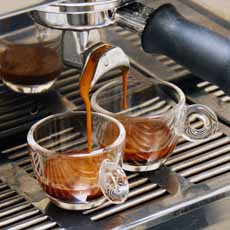
Pulling a double. See the layer of crema that has formed on top of the dark espresso? It is a result of colloids and lipids forced into an emulsion under pressure. Photo by Mark Prince | Wikimedia. |
Continue To Part II: Espresso Tips
Return To Article Index Above
Recipes © copyright their respective owners. Additional material Lifestyle Direct, Inc. All rights reserved.
|