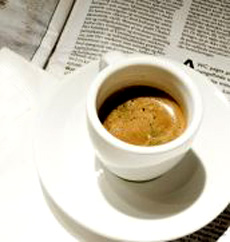
 Espresso with crema, the foamy “cap” on the espresso produced not by milk or cream, but by the pressure of making the drink.
October 2006
Last Updated February 2012
|
|
Expressly Espresso
Page 2: Tips For Making Espresso
This is Page 2 of a four-part article on making espresso and espresso drinks. Click on the black links below to read the other pages.
Espresso Tips
The flavors in a typical cup of espresso are very concentrated. Some coffee-drinkers prefer a single or double shot of espresso instead of one or two cups of coffee to get a quick shot of caffeine. Some coffee-lovers just prefer the intense, dark flavors of espresso to other forms of coffee.
- Bean. Espresso is not a type of bean, but a roast. Espresso is typically a blend of beans roasted anywhere from very light to very dark with a lot of surface oil evident. In Southern Italy, a darker roast is preferred but in Northern Italy, a more medium roast is the most popular type. Companies such as Starbucks and Peets have popularized darker roasts in their blends. Smaller companies buy from different coffee roasters. Ask whose beans a shop buys until you find the one that you like best.
- Caffeine. Because a cup of espresso takes no more than 30 seconds to brew (28 seconds is the ideal brewing time), less caffeine is extracted from the ground beans than in drip coffee, which takes anywhere from 5 to 7 minutes to brew.
- Size. Espresso cups are intentionally small and thick—they’re different from delicate porcelain demitasse cups. Thick cups hold the heat, while large cups dissipate the heat and the crema which carries the aroma in a fine cup of espresso. The proper portion of espresso is one ounce for these reasons. If you want a larger serving of espresso—have another and drink it in its peak form.
- Garnish. You may see coffee served with a piece of lemon peel. This was originally used to counteract the taste of over-roasted, bitter espresso—the oil in the peel blocks the bitterness. Italians traditionally serve fine espresso without lemon peel. However, if you like the added flavor of the lemon peel (we do), feel free to serve it as your own tradition.
- Freshness. Advice continues to circulate that coffee beans should be kept in the freezer for freshness. False! Freezing the coffee coagulates the natural oils contained in the bean. In an espresso, those oils need to emulsify to produce the body and mouthful of the coffee. Coffee can be stored in the refrigerator, but airtight containers are crucial. An airtight container keeps out odors and protects the internal moisture of the coffee bean. No matter what kind of coffee you buy, the best rule of thumb is to buy only what you need for a week, or two weeks at best. Ground coffee will begin to go stale in 24 hours. Keep coffee away from direct light and heat. Direct light and heat begin to cook the coffee oils, and will affect the flavor and aroma properties.
Coffee & Espresso Books
 |
 |
 |
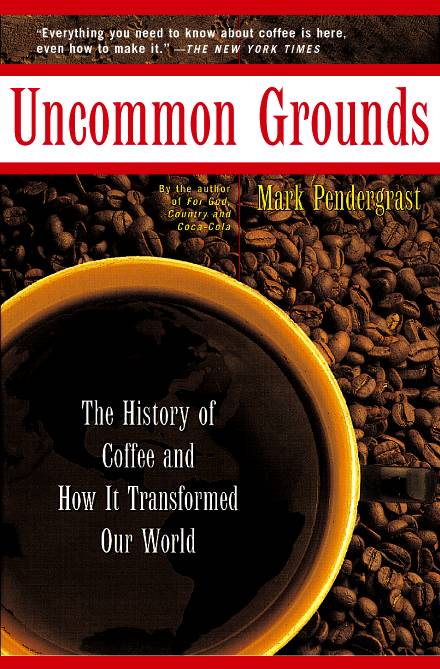
Uncommon Grounds, by Mark Pendergrast. An in-depth look at the rich history of coffee and how it transformed our world. More information.
|
Coffee - A Guide to Buying, Brewing, and Enjoying, by Kenneth Davids. Everything you need to know about the humble cup o' joe. More information.
|
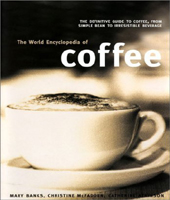
The World Encyclopedia of Coffee, by Mary Banks. Explore coffee’s different uses from aromatic beverage to cooking ingredient. More information.
|
Continue To Page 3: Espresso Glossary Terms A To C
Return To Article Index Above
Recipes © copyright their respective owners. Additional material Lifestyle Direct, Inc. All rights reserved.
|