THE NIBBLE (TM) - Great Finds for Foodies (tm)


RSS feed
(What’s this?)
Top Pick Of The Week

April 1, 2008

.
. .
 

Pierre Marcolini White Chocolate

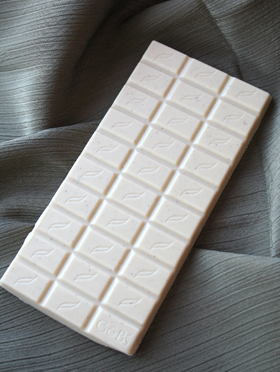
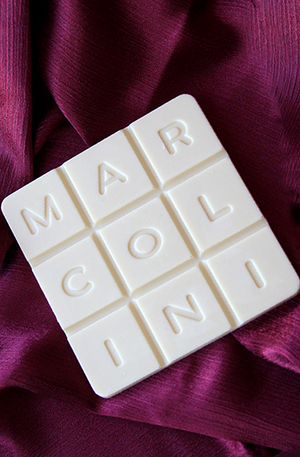
Pierre Marcolini’s white chocolate bar wins the beauty competition. Real white chocolate is ivory, never snow white. All photography by Claire Freierman.

WHAT IT IS: Eleven of the world’s finest white chocolate bars.
WHY IT’S DIFFERENT: More cocoa butter in the recipe, top-quality cocoa butter and a more restrained hand with sugar give these bars aroma and flavor complexities unmatched in lesser white chocolate.
WHY WE LOVE IT: For the same reason we like all great chocolate. Nothing else tastes this good!
WHERE TO BUY IT: Chocosphere.com and MarcoliniChocolatier.com (for the Pierre Marcolini bar only).
.

.
The World’s Best White
Chocolate

CAPSULE REPORT: Many people who enjoy chocolate don’t like white chocolate—possibly because most of them have never had a truly good piece of it from a top chocolatier. Prior to 2002, the USDA’s standards of identity declared that white chocolate wasn’t even chocolate, because it didn’t contain cocoa solids. If it did, it wouldn’t be white! Today, white chocolate that contains at least 20% cocoa butter can hold its head high. It’s officially chocolate.

We’ve always enjoyed white chocolate, although we’ve had our share of the waxy-tasting, over-sugared and insipidly simple varieties. That’s why we want to share our love of it with you. If you can’t find love in our selection of 11 of the world’s best white chocolate bars, we’ll hold our piece. Of chocolate.

Our winners range from $4.25 to $11.75 each, most for a 3.5-ounce, multi-portion-size bar. The selection ranges from Green & Black’s organic chocolate, available at many retailers nationwide, to Pierre Marcolini, available only at Pierre Marcolini boutiques. The other brands include Amedei, Café Tasse, El Rey, Slitti and Venchi. One brand has pistachios, one has coffee beans, one has Kalamata olives and one is sugar-free. All are available online.

This wealth of connoisseur-quality white chocolate invites some actions. First, make a gift of all the bars to your favorite chocolate lover. Or, to ensure that you participate in the enjoyment of the gift, arrange a tasting in that person’s honor (read our article on how to give a chocolate-tasting party). But first, read about these splendid white chocolate bars, and see the photos in the full review below.

     
THE NIBBLE does not sell the foods we review
or receive fees from manufacturers for recommending them.

Our recommendations are based purely on our opinion, after tasting thousands of products each year, that they represent the best in their respective categories.


Learn More About Great Chocolate

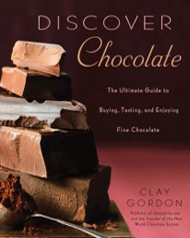
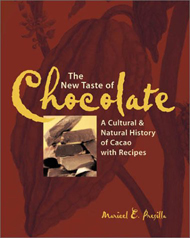
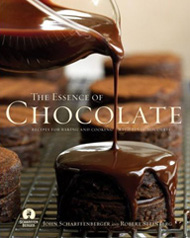
Discover Chocolate - Clay Gordon The New Taste Of Chocolate - Maricel Presilla Essence Of Chocolate
Discover Chocolate: The Ultimate Guide to Buying, Tasting, and Enjoying Fine Chocolate,
by Clay Gordon. A chocophile shares his enthusiasm for learning about the world of fine chocolate. Click here for more information or to purchase.
The New Taste of Chocolate: A Cultural and Natural History of Cacao with Recipes, by Maricel Presilla. A seminal book for learning about chocolate, from one of the most respected industry experts. Click here for more information or to purchase. The Essence of Chocolate: Recipes for Baking and Cooking with Fine Chocolate, by John Scharffenberger and Robert Steinberg. More than 100 recipes, including Chocolate Chunk Challah, homemade “Oreos” and Chile-Marinated Flank Steak. Click here for more information.

The World’s Best White Chocolate: It’s Great!

INDEX OF REVIEW

MORE TO DISCOVER

Introduction: What Is White Chocolate

For most of its history in the United States, white chocolate was not chocolate at all. That’s because, according to longstanding FDA standards of identity, “chocolate” had to contain cocoa solids (a.k.a. chocolate liquor or chocolate mass)—the ingredient that gives chocolate its brown color, as well as the chocolate flavor and aroma. White chocolate, obviously, contains no cocoa solids. It’s a blend of cocoa butter, sugar and milk solids, as well as vanilla for flavor and, generally, soy lecithin as an emulsifier, depending on the producer’s recipe. (All of these ingredients are used in milk and dark chocolates as well; the only difference is that white chocolate lacks the cocoa solids.)

Before achieving official chocolate status, white chocolate was considered “confectionary.” A product called confectionary coating or summer coating, with similar ingredients (milk, sugar, vanilla) but substituting vegetable oil* for butter, was often passed off as “white chocolate.” Since vegetable oil can stand up to much higher temperatures than cocoa butter, in the days before universal air conditioning, confectionary coating was often used to make summer bonbons—“white chocolate” that was often colored lovely pastel shades in addition to natural white.

While many people enjoy it, confectionary coating doesn’t taste like anything that would please a person with a discerning palate. There are also the swarms of middling producers who use as little cocoa butter as possible in their recipes (cocoa butter is the most expensive and character-conferring component) and stretching the bar with milk (bland) and sugar (cloying). No wonder white chocolate has such a bad name. This review will introduce you to great white chocolate you can try and decide, once and for all, how you feel about it. If you already enjoy white chocolate, you’re in for a treat!

Green & Black's White Chocolate

Green & Black’s white chocolate bar: The most “masculine” of the bunch.

*Last year, the Chocolate Manufacturers Association, led by large manufacturers seeking to save money on ingredients, petitioned the FDA to allow vegetable oil to be substituted in all chocolate. In a group protest led by Guittard Chocolate, THE NIBBLE was one of the many that remonstrated, and the petition is currently shelved. But, if it resurfaces, think of what that “vegetable oil chocolate” tastes like. It should urge you to take a moment to act.

White chocolate also has a “medical” advantage benefit over dark chocolate for two groups. People who are allergic to the chemical compounds in the cocoa solids can safely enjoy white chocolate. Those same compounds, which can be poisonous to pets, are also lacking in white chocolate, since it’s just cocoa butter, milk and sugar. But you should still check with your vet before indulging Fifi with a bar.

The History Of White Chocolate

Chocolate itself, in bar and candy form, isn’t so old. The first chocolate bar was invented in 1847 by the Fry Brothers in Bristol, England. Prior to then, chocolate was drunk as a beverage. Milk chocolate was first made successfully in 1897, after Daniel Peter, a Swiss chocolate manufacturer, thought to try making it with the powdered milk invented by his neighbor, Henri Nestlé, 30 years earlier. In the intervening years, everyone had been trying to make milk chocolate with milk or cream. (Read the full the history of chocolate.)

Gourmet White Chocolate
Before 2002, the FDA did not allow these bars to be called chocolate, just “confectionary coating.” From the top, El Rey, Café Tasse Café (with ground coffee beans), Venchi, Vosges d’Oliva and Amedei white chocolate bars.

For a 20th-century product, the history of white chocolate is shrouded in ambiguity. Some claim it was produced in New Hampshire just after World War I, after an American saw it in Europe. Nestlé launched a white chocolate bar in Europe in the 1930s. According to Nestlé, white chocolate was originally created as a way to use excess cocoa butter (although the company does not specify who created it—a detail perhaps lost in history).

The first mass-distributed white chocolate in the U.S. was Nestlé’s Alpine White chocolate bar, introduced around 1948. It included almonds and had a good run through the 1990s (it is now discontinued, to the chagrin of many fans). Competitor Hershey’s didn’t make Hugs, a.k.a. white chocolate Kisses, until 1993, and has since made white-chocolate versions of Reese’s Cups and Twix.

Today, just about every major chocolate maker produces a bar (usually plain, but sometimes flavored), and many a pastry chef spins white chocolate cake, ice cream and mousse from large blocks of white couverture. Its ivory color makes it a lovely contrast against dark chocolate backgrounds of cakes and bonbons. Certain flavors marry better with white chocolate than they do with dark chocolate—lavender, for example—which leads to new flavor combinations and recipes.

Over the last few decades, the world has become a more sophisticated marketplace for fine chocolate. In 2002, the FDA amended its standards of identity, enabling white chocolate to be called chocolate if, among other requirements, it is made from a minimum of 20% cocoa butter (by weight), a minimum of 15% milk powder and a maximum of 55% sweetener (generally sugar or maltitol for high-quality sugar-free chocolate). Any other formulation must still be called confectionary or summer coating.

More than a few famous “food experts” do not realize this, and are heard on television shows or read in print misinforming audiences that “white chocolate is not chocolate.” Don’t believe it, no matter how iconic the speaker. We have personally phoned the FDA and, from their lips to this page, white chocolate made under the standards above is chocolate. Or read the FDA standards of identity yourself.

Percent Signs (%) On White Chocolate Bars

Now, what about those “% cacao” signs that you’ll see on some bars of white chocolate? When you see them on a milk or dark chocolate bar, they tell you what percent of the bar is cocoa solids. But what about a white chocolate bar, that has no cocoa solids to begin with?

The number is telling you the percentage of cocoa butter. Remember that the government-required minimum is 20%; thus, the most average white chocolate bar will have 20% cocoa butter. When you see a number like 28%, 30% or 33% on a bar, you know that the manufacturer is proudly proclaiming that it’s good stuff. The higher the percentage of cocoa butter, the richer and creamier the bar and the more nuanced the flavor. Real white chocolate is rich and creamy and tastes like a member of the chocolate family. Fake white chocolate (confectionary coating) doesn’t.

White chocolate hasn’t garnered the same appreciation as dark chocolate, mainly because, without cocoa solids, it lacks the same breadth of flavor that makes cacao varietals and the percent cacao content in a bar such a vast and exciting world to explore.

Slitti Cioccolato Bianco al Latte
Some gourmet white chocolate bars proudly proclaim their high percentage of cocoa butter (the legal mimimum is 20%, and we’ve seen brands with up to 33%).

What White Chocolate Lovers Should Know About Cocoa Butter

Since most of the quality of the white chocolate is the cocoa butter in it, the more you know about cocoa butter, the more you’ll understand white chocolate.

Cocoa butter is the natural vegetable fat present in the cacao bean. Beans are approximately 52% cocoa butter by weight (the amount varies by the variety of cacao bean); the rest is cocoa solids. After the cacao beans are roasted and finely ground, they are hot from grinding, and are liquid due to their natural high fat content. The cocoa butter is squeezed from the hot chocolate liquor by high pressure (a hydraulic press). It is pressed through fine screens that permit the run-off of the cocoa butter. It solidifies into a yellowish-white fat, solid at room temperature.

Color

The first rule of thumb is that good white chocolate is never white! Its color should reflect the ivory and off-white shades of cocoa butter. If you see white chocolate that is literally white, you can bet that it isn’t real white chocolate. It’s confectionary coating and should be labeled as such, although it often isn’t, especially when sold by local artisans. (We recently bought some toffee from a small specialty toffee shop, that was “dipped in white chocolate.” The minute it arrived, we saw from the snow-white color that it was confectionary coating. The toffee was good, the coating, not.)

Provenance Of The Cocoa Butter

The geography of the cacao beans from which the cocoa butter is derived may influence the texture of white chocolate. As different geographical regions produce beans with different flavors and aromas, they produce cocoa butters of differing hardness levels:

  • South America: softest cocoa butter
  • Central America and Africa: intermediate hardness
  • Asia and Oceania: hardest cocoa butter

What difference does the hardness make? The soft South American cocoa butters are better suited for the cosmetic industry, whereas the hard Asian cocoa butters are probably more beneficial for couverture, the large blocks of chocolate from which candy, fine baked goods and ice cream are made. But these disparities are now in danger of facing uniformity, as recent studies suggest that hardness levels among geographically different cocoa butters are becoming more alike.

Deodorized Cocoa Butter

Before cocoa liquor is molded into blocks of couverture, it must first receive a little extra cocoa butter in the conch. This is done to increase the fluidity and the mouthfeel of the finished chocolate. But cocoa butter—after it has been pressed and separated from the beans—often has a strong and undesirable taste, which can negatively affect the flavor of the finished chocolate. Thus, manufacturers will deodorize, or remove, the natural aroma and flavor of the cocoa butter to produce a flavorless and neutral product. By deodorizing the cocoa butter, a manufacturer can combine cocoa butter pressed from different types of beans, and sell the amalgamated cocoa butter. Since, as noted above, the cacao bean is at least 52% cocoa butter, manufacturers of cocoa powder will have a lot of cocoa butter to sell!

El Rey Icoa Chocolate

El Rey Icoa is the only chocolate bar made with undeodorized cocoa butter, which gives it a true chocolate flavor.

Deodorized cocoa butter is perfect for milk chocolate and dark chocolate (most of what any manufacturer produces). But it makes white chocolate, which has no chocolate liquor to provide flavor, taste more bland. This is why many experts feel that El Rey’s white chocolate, Icoa, is the finest in the world. Its cocoa butter has not been deodorized and retains its natural flavor. Icoa is the only white chocolate in the world made with undeodorized cocoa butter.

The economical benefits derived from deodorizing cocoa butter are sensible, but the practice can lead to relatively similar-flavored white chocolate bars. Some disparities will exist in bars according to brand, however, but for the most part these differences can be too subtle in a casual tasting, which is how white chocolate is most often consumed.

(We’re not saying you’ll like El Rey the best, we’re just explaining the science.) Icoa, by the way, is the protector goddess of native Venezuelans who travel by rivers and lakes. Her relationship to white chocolate? She is said to have a “white” soul.

Now that you know as much as most people will ever know about white chocolate, let’s taste our favorites.

Best White Chocolate

The average composition of a typical bar of top-quality white chocolate is about 30% cocoa butter and 70% sugar and milk solids combined. With such a low percentage of cocoa butter in comparison to milk and sugar, the texture is usually thick, soft and sometimes fudge-like. By contrast, a 70% cocoa dark chocolate bar has a smooth and creamy texture because its composition is usually around 40% cocoa butter, 30% cocoa particles and 30% sugar (and no milk—only white chocolate and milk chocolate contain milk).

White chocolate is known for its “dairy flavors,” which include butter, cream, milk, honey, vanilla, caramel and/or fruit. Every brand of white chocolate will have a different assortment of these flavors. Some bars will be light and ethereal like a bride’s veil, while others will be strapping and bold like a groom’s tuxedo. Like any chocolate, each manufacturer has its own recipe, and the proportions are highly guarded secrets. As shown in the explanation of cocoa butter, above, differences in the raw ingredients significantly impact the chocolate, and manufacturers may use a combination of sweeteners—not all table sugar, for example.

We hope you enjoy every one of these bars as much as we did. Ten of our 11 bars are available at Chocosphere.com. Pierre Marcolini is available at MarcoliniChocolatier.com. Prices are verified at publication, but are subject to change.

Amedei White Chocolate Bar
(Cioccolato al Latte Bianco)
Strong and powerful but not overbearing, this is a white chocolate that strikes a wonderful balance. Neither too strong or too light, it’s the Goldilocks choice of white chocolate bars, being “just right.” It appeals with a sophistication that’s difficult to describe in words, as good as we usually are in our descriptions. Our most expensive bars, they are definitely worth the price.

Amedei White With Pistachios Chocolate Bar
(Cioccolato al Latte Bianco con Pistacchi)
Sweet and savory, smooth and crunchy, and complemented with a remarkably fresh green flavor, this is a bar any producer should be proud of. Pepper highlights linger in the back of the mouth, contrasting with the sweet white chocolate, while lemony notes are prominent throughout. While companies have traditionally paired almonds with white chocolate, one bite of this bar will convince you that pistachios and white chocolate were made for each other. Amedei, one of the greatest chocolate-makers in the world, gets it right with this bar.

  • 3.5 Ounces, $11.75
Amedei White Chocolate
Amedei is an elite, boutique manufacturer located in the town of Pisa, in Tuscany. All of their bars are a favorite among connoisseurs.

Café Tasse Blanc White Chocolate Bar
Among the bars we tried for this review, Belgium’s Café Tasse is probably what most people would expect from a “classic” white chocolate. It’s a little on the sweet side but manages to evade cloying territory. It’s a great go-to bar, and it definitely won’t break the bank.
If you want a lemon-flavored white chocolate, the company makes a “pocket size” bar (1.58 ounces), Blanc Citron, which can be found at specialty stores and cafés that carry Café Tasse. (Neither the Blanc nor the Blanc Café, below, is made in this smaller size.)

  • 3.5 Ounces, $4.25

Café Tasse Blanc Café White Chocolate Bar

Instead of simply adding a coffee flavoring to its white chocolate bar, Café Tasse does it the right way, with actual ground coffee beans. The flecks not only add a charming speckled appearance, but provide a more interesting texture—a wee bit of crunch. The coffee accent is whispered rather than shouted, which is a good thing—large doses of coffee flavor in chocolate can be oppressive.

  • 3.5 Ounces, $4.25

Chocovic Jaina White Chocolate

Chocovic’s Jaina has 31% cocoa butter...and some tangy yogurt!

Chocovic Jaina White Chocolate Bar

This is an unassuming bar that hides a surprise for those who have not read the label prior to the first bite. In appearance, it looks like a normal white chocolate bar; but wait until you taste the tangy yogurt zip in each bite! It’s a light and refreshing bar, definitely more candy than sophisticated connoisseur confection. But it’s equally as enjoyable as the others on this list.

  • 2.82 Ounces, $4.75

Read our full review of Chocovic chocolate, from the Spanish city of Vic, near Barcelona.

El Rey Icoa Chocolate Bar

As mentioned earlier, Icoa, from Venezuela, is the only white chocolate made with non-deodorized cocoa butter. As a result, its flavor is actually chocolaty and nutty, distinctly strong and masculine, which contrasts directly with all other white chocolate bars on the market. (You should be able to pick it out blind, if you’re tasting it with other white chocolates.) A subdued sweetness makes it serious and stern, giving the impression that the bar actually contains less sugar. The texture is also smoother than most white chocolates, which contributes an added sense of refinement. See photo above.

Green & Black’s White Chocolate Bar

This is a very “macho” and assertive bar, boasting strong vanilla flavors and a subdued sweetness level that may seem uncommon for white chocolate. The mouthfeel is a bit more restrained and smooth than other white chocolates. A strong sprinkling of scraped vanilla bean gives it a dramatic appearance. Green & Black’s, from England, is one of the world’s leading brands of organic chocolate.

  • 3.5 Ounces, $4.45

Pierre Marcolini Blanc White Chocolate Bar

A chocolatier and patissier, Belgium’s Marcolini likes his white chocolate bright and strong, perhaps even dessert-like in effect but not as sweet. The chocolate is very lemony with hints of that wonderful Tahitian vanilla speckling the surface of the bar. It’s a fairly complex and vivid white chocolate that resembles Venchi’s bar but diverges with a fuller body and stronger lemon flavor. The lemoniness is natural to the cocoa butter and the production—there’s no added lemon.  In addition to great taste, the product design is stunning, from the square bar that spell MARCOLINI like a beautiful puzzle (photo at the top of the page), to the elegant, minimalist box. At more than $10.00 a bar, it may seem pricey; but Marcolini is always worth it.

Green & Black's White Chocolate

Strong visually and on the palate, Green & Black’s white chocolate bar is organic, too.

Slitti Bianco White Chocolate Bar

Slitti’s white chocolate is simpler than all the other bars we tried, but it remains unique nonetheless. Its flavor is somewhat mild, yet highly reminiscent of sweet milk, which is surprising given that the bar’s cocoa butter content is 30%. The bar is also much harder than any other white chocolate, which makes the texture smooth, not soft. We love Slitti chocolate in general, but the packaging puts it at a disadvantage when compared to the other bars. For a line launched in 1988, the package looks like it’s from 1968 (not a stylish era, and lots of gold foil passing for “class”). Perhaps its location in the tiny town of Monsummano Terme, in Tuscany, keeps it locked in time. But no matter how good the contents, packaging sells—especially in other countries where you’re not well-known. Per favore, Signor Slitti: Let some of Italy’s great design talent give you a new look.

  • 3.5 Ounces, $7.95

Venchi Bianco White Chocolate Bar

A very light and refreshing bar, laden with crisp lemon notes (natural, no lemon added). There are subtle peaks of vanilla that contribute an interesting cookie-like flavor, but with sophistication in mind rather than any cloying sweetness. This is a very pleasant and low-key white chocolate with a gentle temperament. The elegant, Old World-evocative wrapper, with a 19th-century painting of a woman pouring chocolate into a mold (photo at right), hints at the great flavor inside.

  • 3.5 Ounces, $5.60

Venchi Bianco Sugar Free White Chocolate
Bar

Venchi’s line of sugar-free chocolates are world-class across the board. No one would know there’s no sugar in this bar (it uses maltitol, the best sugar alcohol for “real”-tasting candy and cookies). Although this sugar-free white chocolate retains the same pleasurable features that make the regular white chocolate bar so uplifting, here we see a somewhat savory, fuller sensation at the beginning of the taste. This dissipates, however, and the flavor evens out into a lemony and crisp theme that’s light, refreshing and very cheerful, just like the original.

  • 2.45 Ounces, $6.35
    (the higher price is due to the cost of maltitol)
Venchi White Chocolate Bar
Venchi’s white chocolate bar. The sugar-free bar (not shown) tastes almost as good as its regular white chocolate. While you’ll notice a difference, because sugar has a different consistency and flavor than maltitol—no one eating the sugar-free bar alone would realize it’s sugar-free.

Vosges d’Oliva White Chocolate Bar

An eye-catching bar (shown in the photo below), to be sure, and a eye-raising one as well. But there’s no need for alarm—this is no weird, experimental bar. Although Vosges gets kudos for the experiment (along with their Mo’s Bacon bar, a delightful dark chocolate bar with pieces of real bacon), this bar is delicious. The olives are chopped so finely that they contribute a mild tanginess and texture, without an obvious salty, Kalamata olive flavor. Or at least, there are no explosive olive bursts, just subtle charm (you can give a piece to someone and they may not know they’re eating olives). Using El Rey’s Icoa chocolate as the base was a good decision, since Icoa’s strong character balances out the tangy olive notes and contributes its own great white chocolate flavor.

Our Top Chocolate Reference Articles

Vosges d'Oliva White Chocolate Bar
Vosges d’Oliva white chocolate bar is made with Kalamata olives. Olives in a chocolate bar? Ah love it!
If you’ve enjoyed learning about chocolate in this article, we’ve created a treasure trove of articles for you in THE NIBBLE’s Chocolate Section. Here are just a few of our favorites:

And if you’ve enjoyed our survey of the best white chocolate, take a look at:

Laissez le bon temps du chocolat blanc roulez!

— Karen Hochman and Peter Rot

FORWARD THIS NIBBLE to anyone who loves chocolate, and especially to people who think they don’t like white chocolate.

THE BEST WHITE CHOCOLATE
Gourmet White Chocolate bars

  • Amedei, 3.5 Ounces, $11.95
  • Café Tasse, 3.5 Ounces, $4.25
  • Chocovic, 2.82 Ounces, $4.75
  • El Rey, 2.8 Ounces, $3.25
  • Green & Black’s (organic), 3.5 Ounces, $4.45
  • Slitti, 3.5 Ounces, $7.95
  • Venchi, 3.5 Ounces, $5.60
  • Venchi Sugar-Free, 2.45 Ounces, $6.35
  • Vosges d’Oliva, 3 Ounces, $7.45

Purchase online* at
Chocosphere.com

  • Pierre Marcolini, 2.82 Ounces, $10.50

Purchase online* at
MarcoliniChocolatier.com

White Chocolate Bars

*Prices and product availability are verified at publication but are subject to change. THE NIBBLE does not sell products; these items are offered by a third party with whom we have no relationship. This link to purchase is provided as a reader convenience.


Check Out These Other Top Pick Of The Week” Chocolates:


FOR ADDITIONAL INFORMATION, special offers, contests, opinion surveys, THE NIBBLE back issues archive, product gift-finder and more, visit the home page of TheNibble.com.

Do you have friends who would enjoy THE NIBBLE?
Click here
to send them an invitation to sign up for their own copy.


© Copyright 2004-2008 Lifestyle Direct, Inc. All rights reserved. All information contained herein is subject to change at any time without notice. All details must be directly confirmed with manufacturers, service establishments and other third parties. This material may not be reproduced, distributed, transmitted, cached, or otherwise used, except with the prior written permission of Lifestyle Direct, Inc.

.
Contact Us

Gourmet Giveaway


Dancing Deer

Green Mountain


.