Advertisement
THE NIBBLE (TM) - Great Finds for Foodies (tm)
  Sign Up | Contact Us | Email To A Friend | Blog  
       
Twitter RSS feed [?]


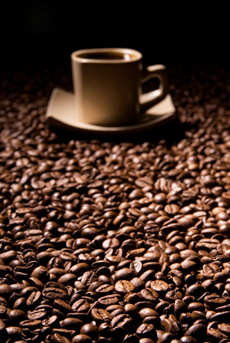
Cup of Coffee Beans
Grounds for confusion. Photo by Klaus Post.
MENU


NutriNibbles

Main Page
Delicious Foods for Health,
Wellness & Fitness


Product Reviews

Main Page
Food, Beverages, Books,
News & More


Home Page

Link To Other Sections:
Newsletter, Marketplace,
Food Fun, Home Zone


ABOUT THE AUTHOR


STEPHANIE ZONIS focuses on good foods and the people who produce them. Click here to contact her.


Product Reviews / NutriNibbles

Organic Matter

October 2006: All About Organic Coffee

To jump down to the product(s) of the month, click here
Click here to read other months’ columns


My name is Stephanie Zonis, and welcome to Organic Matter for October, 2006.

Grounds For Confusion, Grounds For Change:
The Complex World Of Organic Coffee

Coffee is the second most-drunk beverage in the world, after water. Coffee beans have become the most heavily-traded agricultural commodity, and the second most heavily-traded commodity, period (oil is most heavily-traded). So, how difficult can it be, after all? Coffee is either organic or not organic, right? Not exactly. Some that’s produced organically isn’t certified organic, as the certification process costs too much for the farmer(s). But there’s a lot more to it than that these days. You cannot discuss organic coffee without digressions into related topics such as shade grown, Bird Friendly, Fair Trade, sustainability, and small (or micro) lots. While this month’s column isn’t meant to be a complete discussion of any of these issues, it wouldn’t do to ignore any of them altogether, either.

First, and as usual, a little background is called for. A coffee plant is a woody, broad-leafed, evergreen. Coffee shrubs can reach over 30 feet in height, but they’re usually kept much shorter to permit easier harvesting. The shrubs grow best in the so-called “Bean Belt,” a region that circles the globe between the Tropics of Capricorn (23.5 degrees south of the equator, running through areas such as Australia, Chile, southern Brazil and northern South Africa) and Cancer (23.5 degrees north of the equator, which runs through Mexico, the Bahamas, Egypt, Saudi Arabia, India, and southern China).
Coffee Plant
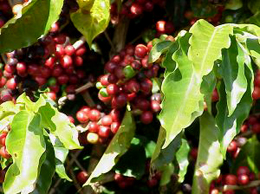
Photos of coffee shrub and coffee cherries below by Ana Labate.
Coffee Cherries
The shrubs do not become productive for at least three or four years after planting. Their blossoms are white; after the blossoms appear, it takes almost a year for the coffee cherries to mature. A coffee cherry is the fruit of the coffee shrub. It’s not a cherry at all, but it looks like one when fully ripe. Inside the cherry, covered by various membranes, protective layers, and a thick skin, is a pair of coffee beans.

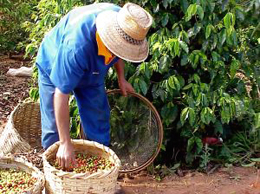
Coffee shrubs produce continuously, meaning that on any one plant you’ll find blossoms, unripe fruit and mature cherries. Each season, one plant will yield enough beans for between 1 and 1.5 pounds of roasted coffee. Most coffee is still harvested by hand, although some larger farms now use mechanical harvesters.

Although coffee was first consumed by humans as a food, it was a beverage of great popularity in the Islamic world by 1300. The custom of drinking coffee gradually spread to Asia, then Europe; from Europe, its spread to North America was inevitable. Although there are at least twenty species of the genus Coffea, only two are of commercial importance, Coffea arabica and Coffea robusta (the upright form of Coffea canephora), which produce, respectively, arabica and robusta beans. Arabica beans are descended from the original East African coffee trees, and they still account for some 70% of the beans grown today (of that 70%, however, only a small percentage are considered of good-enough quality for “gourmet” coffees).

Arabica shrubs are finicky, preferring higher altitudes (at least 2,000 to 3,000 feet above sea level), shaded sunlight, relatively constant temperatures, and sufficient rainfall; they can be killed by a heavy frost. The robusta species wasn’t developed until the early 1970s. Robusta plants are hardier than arabicas. They grow more easily at lower elevations, have a heavier yield, and are much more tolerant of sunlight (even direct sunlight) and warmer temperatures. Robusta beans are smaller, rounder and said to be more bitter-tasting; they also contain roughly 50% more caffeine than do Arabica beans.

Harvesting Coffee

Coffee is usually harvested between September and March north of the equator, and between April and May south of the equator. Although some arabica shrubs are harvested selectively (meaning the cherries will be hand-picked only when ripe), it’s much more common for all of the cherries on one branch, ripe or unripe, to be stripped all at once. After picking, the cherries must be processed immediately. They can either be dry-processed or wet-processed. 

  • Dry-processing is the older and simpler method of the two. Coffee cherries are dried, usually in the sun on specially-constructed surfaces or raised terraces (sometimes machine drying is part of this process). The cherries are periodically turned or raked during the drying process, which can take up to 4 weeks. Once the cherries are dried, the entire outer hull can be removed from the beans at once.
  • Wet processing involves water, as might be suspected, and a great deal of it. This is the typical processing method for Arabica coffee; most robusta is dry-processed. “Green” (that is, unroasted) coffee beans that are products of wet-processing are usually thought to be of higher quality than dry-processed beans. Wet-processing involves separating the beans from the rest of the cherry before drying. In progressive stages, much of the coffee cherry’s skin and pulp are removed from the beans by machinery and washings. However, some pulp, as well as a sticky, almost gelatinous layer, will still adhere to the beans afterward. This is removed by fermentation, accomplished with the use of enzymes, followed by more washing.
  • The beans are then dried in the sun or by machine. Although it is beyond the scope of this article, wet-processing (also called wet-milling) was a major source of resource waste and pollution for many years and in numerous countries. Wet-processing requires large amounts of water and creates vast quantities of oxygen-depriving coffee waste, which was often dumped, untreated, on land or into water, causing tremendous river/stream pollution, including expanding “dead zones.” In the late 1990s, governments of countries affected by such stream pollution began to demand clean-ups of this part of the coffee industry. Among other measures, water use was to be minimized; coffee waste was to be composted or turned into biogas, a fuel produced by the activity of anaerobic bacteria.

The proper drying of coffee beans is considered an important step in their processing. Overdrying will result in broken beans, considered inferior. Once beans are dried, they are graded, and eventually, bagged and shipped. Coffee beans are shipped “green” and roasted to the degree desired by the purchaser.

Organic Coffee

How does organic vs. conventional production enter into this? Ideally, organic farming views the farm as an ecosystem unto itself—one that must be kept healthy and in a state of balance. After tobacco and cotton, conventionally-produced coffee is the third most heavily chemically treated crop in the world. Not only are some of the synthetic pesticides and fertilizers used banned in most western nations; they’re often used without any genuine regulatory supervision.

Cup Of Coffee
Looks good, smells good...but does it have residual pesticides?
While some people fear pesticide residues in their coffee, there have been reports that, since it’s the coffee cherry that has these chemicals applied to it, the complete removal of the fruit/pulp during processing would mean no chemical residue was present in or on the beans. Such reports add that roasting the beans to the usual high internal temperatures (above 400°F) would drive off any chemical residue that might, by chance, remain. Others disagree; there has been speculation that agrochemicals may be taken up through the roots into coffee plants, in which case coffee beans could be carrying their residues.

But nobody seems to be laboring under any delusions about the effect all of this chemical use has on the coffee farmers, their families, and the environment. Runoff from synthetic pesticides and fertilizers contaminates both land and water for the people who grow coffee plants, causing immediate as well as long-term health problems. The chemicals themselves wipe out many species of plant and animal (especially insect) life indigenous to any area where they’re applied, and there’s no lack of evidence to suggest that both direct and indirect contact with many of these agrochemicals makes people very sick, especially children. Last but not least, synthetic chemicals for coffees are not cheap; organic coffee lessens expenditures for these chemicals that are no longer used and reduces dependence upon off-farm materials. As part of organic regulations, organic coffee must be grown on land that has not seen the use of synthetic pesticides, fertilizers, or other prohibited substances for three years, there must be a sufficient buffer zone between the organic coffee and any conventional crop, and the farmer must have a suitable crop rotation plan to help prevent soil erosion, pests, and the depletion of soil nutrients.

Socially Responsible Coffee. Is this particular type of “socially responsible” coffee a big deal to anyone? Very much so. There are importers and roasters who offer multiple varieties of organic coffees and take immense pride in the fact that organic coffee, once considered of inferior quality, has come a long way in that department in a short time. One such roaster is Chris Neumann, co-founder of Sweetwater Organic Coffee Company. Mr. Neumann, and his wife and business partner Nora Edison, offer only organic coffees that they roast themselves. This is a fledgling operation, but both partners are passionate about running an ethical business, and to them that means the use of organic beans—but only the best organic beans they can find. As Mr. Neumann says, “I choose to carry the best coffee that’s sustainable and responsible within an organic-certified framework.” He buys from what he sees as only the most responsible importers, companies like Elan Coffee Company, who were pioneers in getting organic Peruvian coffee to the U.S., among other things. Mr. Neumann understands that not everyone is interested in the ethics of coffee, but after speaking to him, I’m not sure he knows why that is the case. He seems extraordinarily committed to the idea of sustainability, and it’s evident that that goes hand-in-hand with organics as far as he is concerned.

Fertilizers. Peter Giuliano, the Director of Coffee at Counter Culture Coffee, is another devotee of organic farming (and sustainability; more about the latter further on). He points out that most synthetic fertilizers not only take fossil fuels to produce, but are “NPK” blends (combinations of nitrogen, phosphorus, and potassium). While all of those elements are necessary for plant growth, Mr. Guiliano likens fertilizing solely with these blends as the equivalent of living on meat, pasta, and milk. You might be able to survive, but you won’t be very healthy. Synthetic fertilizers completely ignore the micronutrients coffee plants require to produce better-quality beans.

Composting. Mr. Giuliano is a great proponent of composting, also a requirement for any certified organic coffee farm (specifically, the coffee pulp, which is the coffee cherry minus the beans, must be composted). He insists that great coffee begins with great soil health, and he clearly thinks composting is the best way to achieve that. He also maintains that coffee plants are often forced to overproduce through excessive application of nitrogen, something that will reduce coffee quality. And he says that the agrochemicals used in conventional coffee production only work for a limited number of years, in part because the animals designed to be killed off by pesticides, etc., will become resistant and in part because this system is so unhealthy for farmers and workers (I’ve read, too, that agrochemicals can shorten the productive life of coffee plants).         

Higher Prices. Will you pay more for organic coffee? Yes, almost certainly, although in theory the farmer growing it will receive a premium for his beans, too. Is there “cheating” in the organic coffee industry, so that people are paying organic coffee prices and receiving conventionally-produced beans? There have been accusations of this (indeed, some people still maintain that it simply isn’t viable to produce coffee organically), but these charges are difficult to prove. Does organic coffee taste better than conventionally-produced coffee? That is for you to decide.

Shade-Grown, Bird Friendly® Coffee

Remember those robusta beans that are more tolerant of heat and direct sunlight than their arabica kindred? Because they have a higher yield and can be grown at lower altitudes, as well, they have found great favor with some coffee roasters and importers, especially those whose products are geared toward the less-pricey “mass market” coffee. Coffee farmers growing the robusta beans are doing so by clear-cutting tracts of indigenous vegetation to cultivate their coffee shrubs. Arabica coffee shrubs, which are less tolerant of imperfections in their surrounding microclimate, are grown under a canopy of shade from taller trees (“overstory” trees), such as banana, plantain, citrus, medicine-producing trees or others native to an area. The overstory trees shield coffee plants from excessive winds and light; they provide natural protection from temperatures and humidity that may be less than ideal. Such coffee is called “shade grown.”

Why is this important? Coffee cherries mature more slowly in this filtered sunlight. According to some coffee experts, this gives the beans a chance to develop more natural sugars and a fuller flavor. On the downside, the cherries mature more slowly in a world where time is money. The indigenous shade trees aid in the retention of soil moisture and may help prevent some soil erosion, a major concern in any form of agriculture, although there is controversy over this.
Coffee Cherries
Coffee cherries.

The overstory trees planted to tower above the coffee plants can provide economic diversification and some minimization of risk for a farmer, as he or she can harvest the bananas or plantains or other crops (such as macadamia nuts) produced by the trees or by insects living in them (in some cases, beehives in the shade trees allow for a harvest of honey). The shade trees may also prevent the sun from bleaching some nutrients out of the topsoil, meaning that less fertilizer is required. Nitrogen, critical to determining coffee yield, may be present in greater quantities naturally in shade grown systems, due in part to the degradation of material that falls from the overstory trees. There’s some speculation that shade grown coffee plants live and bear longer than do coffee shrubs grown in the sun. Definitive statements are difficult to make here, as the chemistry surrounding coffee plants and their environment is still imperfectly understood.  The chief drawbacks to shade grown coffee are lower, slower yields; poor farmers often have little incentive to wait for less coffee for a longer period of time simply because it might be better for the environment. 

Certainly, one of the most important aspects of shade grown coffee is its effect on biodiversity. Since the introduction of robusta coffee and the clearing of innumerable acres of vegetation to support its cultivation, populations of many migratory songbirds have been in serious decline. These songbirds don’t just look pretty; they’re a major player in helping keep down populations of insects that affect coffee (and other) plants. Up to 150 species of songbirds have been found on shade grown coffee farms; the usual number of bird species on any robusta farm is much lower. Their presence eliminates the need for much of the use of pesticides. However, if their habitat is destroyed by clear-cutting for robusta plantations, the birds have no place to live.

Such was the concern over the declining songbird populations that the Smithsonian Migratory Bird Center, part of the National Zoological Park in Washington, D.C., began certifying some coffees as “Bird Friendly.” A Bird Friendly coffee must be shade grown as well as organic; companies selling these coffees contribute 25 cents per pound sold to the Smithsonian Migratory Bird Center to support research and conservation programs. Currently, over one thousand individual growers in Bolivia, Columbia, El Salvador, Guatemala, Mexico, Peru, and Venezuela, produce over 3.9 million pounds of Bird Friendly coffee annually. Most shade grown coffee is organic, but not all shade grown and organic coffee is Bird Friendly.
Bird Friendly Logo
The Bird Friendly® logo certifies that the coffee is shade-grown and protects the habitats of songbirds.

If a coffee is not certified Bird Friendly, how can you be sure it’s shade grown? Good question. At least one company, Volcanica Coffee, offers “certified” shade grown coffees; representatives of the company visit the coffee farms to be certain the coffee really is grown as a shade crop. And it isn’t just birds who benefit from shade grown coffee; insects and small mammals, among others, find shelter and food under and in the taller shade trees.

Fair Trade Coffee

Someone once wrote in a song that “the rich get richer and the poor get children.” According to industry statistics, for every pound of coffee sold in the US (with a typical retail price of from five to nine dollars), the average coffee farmer receives less than thirty-five cents, while the average picker would garner less than fourteen cents. The disparity is even greater when the coffee is sold by individual cups. The price of coffee was once protected by a set of multinational treaties called the International Coffee Agreement (ICA). According to a United Nations report submitted in 2005, between 1980 and 1989, the International Coffee Council Composite Indicator Price for coffee averaged just under $1.28 per pound. But in 1989, the ICA collapsed, and, with it, the price of coffee.

Up to 15 years later (between 2000 and 2004), the average price had still not Coffee Beansrecovered, reaching only 54.33 cents per pound. The same report estimates that some 125 million people worldwide depend upon coffee for their livelihood. A small number of more fortunate coffee growers were able to form new relationships with specialty coffee associations, disaster relief groups, or other organizations that enabled them to stay in coffee farming and make a living at it. In many situations and countries, however, farmers were unable to eke out even a meager existence by growing coffee. They no longer had money for basics such as education or medicines. Many simply abandoned their farms, turning instead to crowded urban areas where there was already a high level of unemployment or underemployment. Farmers also emigrated illegally in an attempt to find work of any type; low coffee prices stimulated increased planting of narcotics.

In 1997, a number of diverse groups (including some of the specialty coffee associations and disaster relief organizations), attempting to find a way out of this increasingly bad situation,  joined forces to form FLO, Fair Trade Labeling Organizations International. There are twenty individual national Fair Trade associations; in the US, the association is called TransFair USA (the other associations are in Japan, Canada, and seventeen European countries). Coffee (or other commodities) certified as Fair Trade must comply with a number of conditions economic, social, and environmental. For instance, Fair Trade emphasizes direct trade with farmer cooperatives or collectives, thus bypassing the formerly ubiquitous middlemen who were the farmers’ sole means of gaining access to international markets but often took the lion’s share of any profit gained from selling the coffee. Fair Trade demands the free association of workers and farmers, with “structures for democratic decision-making.” Farmers are to be paid fair prices for their crops, and workers must be given decent living and working conditions. Farmers must have access to pre-financing, as well as “additional premiums for community and business development.” And both agricultural and farm management practices must be long-term sustainable, including restricted use of agrochemicals: genetically-modified organisms (GMOs) are not permitted on Fair Trade certified farms.

This sounds wonderful, but not everyone is enamored of Fair Trade. For starters, the FLO will only certify cooperatives or collectives of farmers, not individual farmers, effectively penalizing those with independent farms who care deeply about the quality of their beans. Typically, certification of cooperatives or collectives allows the hundreds or even thousands of farmers that are part of these groups to share the certification cost, which will, Nicole Chettero, Public Relations Manager of TransFair USA, says, “more than likely pay for itself within the first year.” 

But not everyone within a collective or cooperative will care equally about coffee bean quality. Ms. Chettero notes that there isn’t sufficient manpower within her Coffee Beansorganization to certify every individual farmer in each country right now, and adds that “any individual farmer who has the resources to spend on certification probably doesn’t need to be certified,” a statement I don’t necessarily accept. Fair Trade’s goal, according to Ms. Chettero, is to help the “most disadvantaged” farmers before anyone else gets assistance, those who live in isolated areas with limited access to markets and may have no idea what the price of coffee is in the wider world. This is admirable, but just because someone doesn’t have the “most disadvantaged” status conferred on them by an outside entity, it doesn’t mean they don’t need assistance, whether that’s with the price of their coffee, pre-financing for the next year’s crop, or technical help in transitioning to a more ecologically-friendly farming system.  Some individual farmers have formed, or are trying to form, direct relationships with specialty coffee roasters or sellers in the U.S., and perhaps in other countries, as well.

Some roasters or sellers regard Fair Trade as a “handout” or subsidy. Tom, of Contra Café, notes that “Fair Trade is getting better at finding high quality coffee but a portion of what they buy is low quality bought at a (higher) price. The farmer gets the higher price not because he/she has outstanding quality but rather because they happen to be members of a coop with strong links to Fair Trade.” The current minimum Fair Trade price paid to farmers for conventionally-produced coffee is $1.26 per pound; for organic coffee, it’s $1.41 per pound. Contra Café, on the other hand, pays their farmers $1.50 per pound for what they deem the best-quality beans. Another roaster, Groundwork Coffee Company*, also prides themselves on establishing direct relationships with the farmers and cooperatives who grow the coffee they sell. A written declaration on their website notes that, until recently, they chose not to have their coffees Fair Trade-certified, and their reasoning follows:

*Editor’s Note: The company spells its name completely in small letters, but because this looks like a proofreading error in the context of our story, we have chosen to capitalize it.

“Most of the coffees we buy, and every one of the relationship coffees in our inventory are purchased at prices well above the fair trade prices set by TransFair. Therefore we refer to these coffees as fair trade, or more accurately, fairly traded coffees. In fact, the majority of these coffees are certified as fair trade at origin. However, until now, Groundwork has resisted paying TransFair USA for certification for a number of reasons. Our primary reason for not working through TransFair is that through their program, only coffee produced by cooperatives qualifies to be certified by TransFair as fair trade. This leaves many wonderful and committed family farmers unable to obtain TransFair certification. Several of the coffees we buy come from independently owned and operated farms. These farms are models of responsible land stewardship and sustainable agricultures and business practices. Although we pay them well above the fair trade price for their products, we cannot have them certified through TransFair because of their status as independent farms.

Additionally our decision not to seek TransFair Certification is based on differing philosophies about how to promote coffee quality. We believe the TransFair model makes no provisions for compelling coffee growers to improve the quality of the coffees they produce. Rather, the model of paying blanket fair trade prices for all levels of coffee quality can only foster a climate of mediocrity. At Groundwork, we believe that failing to assign value to coffee quality is a disservice to the farmer and smallholder alike. Instead we prefer to participate in a program that rewards and encourages excellence in products and growing practices. We believe the most sustainable business model addresses value rather than prices and subsequently rewards the best qualities with the best prices.”

I have checked with the President of Groundwork, Ric Rhinehart. Although he will not permit me to quote the exact price he pays for a pound of beans, because he doesn’t like to see “raw green pricing without a look at the costs associated with converting coffee into a roasted pound,” the minimum price groundwork is currently paying, which happens to be for an organic coffee, is some 19% above Fair Trade’s “floor” (or minimum) price for organic coffee beans.        

If you sell coffee, for each country with a Fair Trade program in which you wish to sell, you must pay to become a Fair Trade licensee, even though the certification requirements are the same across the board for all member nations. Ms. Chettero explains this policy by saying that it better allows each member country to track the coffee supply chain. If all of the Fair Trade activity was centralized, say, in Bonn, Germany (the headquarters of FLO), it would be far more difficult to follow any “chain of custody.” As she notes, “A lot can happen between the farm gate and a U.S. port.” Then, too, Ms. Chettero cites cultural and linguistic disparities between member nations, remarking that they’d be a great hindrance to raising consumer awareness of Fair Trade. And the primary relationships Fair Trade seeks to cultivate with businesses in each country would likely be unviable. While it’s true that US consumers differ greatly from those in Japan or Europe, I don’t know enough about consumer differences between nations, or Fair Trade’s relationships with coffee businesses, to be able to comment on her statements. Still, for smaller-scale roasters and coffee businesses, it often makes selling their coffee in other countries an impossibility; they simply can’t afford the fees. (Fees for Fair Trade certification for coffee are paid by the roaster and based on the number of pounds roasted per year. For all other commodities, the certification fees are paid by importers.) 

According to the TransFair USA website, most coffee that is Fair Trade certified is both shade grown and organic, but neither is mandatory. FLO was concerned, I was told, about “setting the bar too high.” The “organic” label requires another degree of certification, and it was feared that poor coffee farmers would turn away from the idea of Fair Trade if too many certifications were required. Ms. Cheterro assured me that Fair Trade was the beginning point for many farmers to transition into organic agriculture, but I’ve been able to find no independent research confirming that. I was also told that Fair Trade coffee requires integrated pest management (IPM), a system which, while not organic, is less dependent on agrochemicals. Since shade grown coffee supposedly cuts down on pests, the logic is that most Fair Trade coffee is shade grown by default.     

As is the case with organics, there are accusations of cheating. A letter in the London Financial Times dated September 8th of this year states that Peru, the world’s top exporter of Fair Trade coffee, is paying workers less than the legal minimum wage. Allegedly, Canadian satellite data given to the paper indicates that roughly one-fifth of coffee from one association certified as Fair Trade is being illegally planted in what should be protected national forest. It’s also been reported that non-certified coffee is being stickered and sold as Fair Trade. The Fairtrade Foundation (the U.K. equivalent of TransFair USA) has denied these charges, issuing a strongly-worded reply, and has sent inspectors to Peru to investigate the situation. The Financial Times maintains that four out of the five certified farms the paper visited were paying casual laborers less than the minimum wage; the Managing Director of FLO insists that such an occurrence is not systemic in coffee. However, the head of the Peruvian Coffee Chamber, a private exporters’ group, has declared that no one in the industry is paying workers minimum wage, as producers just can’t afford to do so. Nicole Chettero has told me that, at least as of mid-September, no evidence for any of these charges had been given to FLO, though it had been requested.

It is no less than just to try to provide decent living and working conditions for the people who ensure that millions of Americans can have their daily caffeine fix, and Fair Trade is a beginning toward that. The TransFair USA employees I’ve encountered are invariably enthusiastic, and I believe they’re interested in doing real good. Chris Neumann of Sweetwater Organic says that Fair Trade “is a starting point that makes a difference in peoples’ lives, but it isn’t the only model”. And Fair Trade is still a very young movement. There’s been tremendous hype surrounding the idea of Fair Trade, and the coffee industry is almost unimaginably enormous and complex. What the future will hold for Fair Trade is anyone’s guess.

Sustainable Coffee

Sustainable production of coffee is another huge topic, one that deserves multiple research papers all by itself. The same United Nations report that discussed the freefall of coffee prices and the economic repercussions thereof makes repeated calls for guaranteeing the future of coffee through “prioritizing the issue of economic sustainability, i.e. to ensure that coffee production does not entail a loss to growers.” Dr. Nestor Osorio, author of the report and Executive Director of the International Coffee Organization, declares that, while “the most obvious strategy” for sustainability would be crop or activity diversification, either of which might yield a better return, many coffee farmers simply don’t have that option. Due to local climate and geology, infrastructure, and restrictions on market access to other crops, it can be an exceptional challenge to establish any alternatives to growing coffee. Peter Giuliano of Counter Culture adds that, compared to other tropical crops, coffee can bring farmers a lot of money, comparatively speaking. Further, of the other crops that can be grown as second crops in coffee farming, most don’t store nearly as well as coffee beans. An additional difficulty is over-intensive farming, a common occurrence, because it often happens that one small plot of land must support an increasing number of people over time.

While economics it an important part of it, the issue of sustainability is far broader in scope. As well, sustainability encompasses environmental, social, and quality issues. It has been suggested that current, conventional, intensive agricultural methods, destructive to the environment, are simply not sustainable in the long-term. Given that conventional coffee production accounts for the overwhelming majority of the coffee bean crop annually, this must be of some concern. Is organic farming the answer, then? Not entirely. Organic coffee beans can command higher prices than those produced conventionally, and organic farming addresses concerns both environmental and social, but organic farming doesn’t guarantee economic sustainability or assure the farmers’ well-being.

How about Fair Trade certification? That’s not the whole answer, either. The Fair Trade programs’ primary concern is with decent living and working conditions for farmers and workers; sound environmental practices are not given the same priority. How about shade grown or Bird Friendly coffee? Like organic farming, these are agricultural systems, concerned largely with the environment and biodiversity. Shade grown/Bird Friendly coffee farming can yield a second crop for the farmer, which should improve his/her economic situation and minimizes risk in case of the failure of the coffee crop, but in no way does either practice promise long-term economic viability. Intelligentsia Coffee & Tea has a long, well-written article on their website about their buying practices, which they refer to as Direct Trade, a trademarked term (the company does not carry coffees certified Fair Trade).
Fair Trade Logo
The Fair Trade Certified seal provides assurance to consumers that workers have received decent wages and working conditions, and farmers have received a fair price for their coffee.

Intelligentsia believes that truly sustainable coffee production requires “a mutual investment of energy and the idea of creating strategies together as partners in the pursuit of better quality, better return, and long-term viability.” Every link in the long chain of coffee, from grower to miller to exporter to roaster, is key; the company’s website states that “when all of these people work in harmony and with full transparency, it is called ‘sustainable business’.”

Counter Culture Coffee’s ideal long-term system involves teaching the producers what great coffee tastes like. The idea is to give them the tools to evaluate their own quality and have farmers figure out for themselves how to grow great coffee beans. The company refers to this as “closing the feedback loop.” According to Peter Giuliano, Counter Culture wants to deliver strong premiums to those practicing good sustainability and coming up with great coffee, a practice which would help in reaching the viable production of high-quality beans over a period of many years. This brings up the final aspect of sustainable coffee production, and one that’s pushed aside too often: coffee quality.

Consumers who buy their morning java at the train station, or drink the coffee at the office because that’s what’s available, may not be overly-fussy about coffee quality. But for many others, coffee has become the new wine. Coffee enthusiasts will debate the merits of their favorite brews loudly and passionately, growing starry-eyed as they compare a Tanzania Pea Berry to an Ethiopian Yirgacheffe. As a World Cup final is to an ardent soccer fan, so are aroma, flavor, roast profile, and brewing method to the caffeine devotee. You undoubtedly know some of them, if you’re not one yourself; these are your friends and loved ones who consider Starbucks to be the Microsoft of coffee.

So, what determines coffee bean quality? Just about everything. The specific variety of bean, the microclimate in which it’s grown, how it’s grown, harvest, processing, drying, storage, and shipping. And that’s just for the unroasted coffee beans!  Leaving the art of roasting out of the picture for a moment, think about the practices discussed so far. Organic, Shade Grown/Bird Friendly, Fair Trade, and sustainable. What do they all have in common? None can promise a high-quality coffee bean. Even a combination of these practices is no pledge of a good cup of coffee. If consumers of upscale/gourmet coffee don’t like the quality of their brew, they won’t buy it again. And insufficient consumer demand renders long-term viability impossible for any product. coffee. (Incidentally, roasting, in and of itself, is critical to coffee quality. A good roast can bring out the subtleties in coffee aroma, flavor, and body. A poorly-done roast can make a great coffee undrinkable.)

The next obvious questions, therefore, are what constitutes a good cup of coffee, and whether it isn’t all subjective. Geoff Watts, the buyer for Intelligentsia, admits there’s a built-in subjectivity with any sort of tasting. Within the coffee industry, however, as well as outside of it, there’s a common set of descriptors. These are used worldwide at different competitions, such as the prestigious Cup of Excellence (probably the best-recognized and most successful of the multinational contests); many coffee-producing nations have their own competitions. A typical coffee competition would begin with the jurors, some of whom who are likely professional tasters, sampling anywhere between 200 and 1,000 coffees. Mr. Watts, who has been a juror for 12 to 15 of these competitions within the past few years, recognizes that there are descriptors that emphasize points of agreement, as well as those that diverge along individual or national preferences. These descriptors include major categories such as aroma, “cleanliness” (which includes the degree of clarity and whether there is any “noise,” distracting elements introduced as the result of poor harvesting or post-harvesting practices), flavor, body (represented by degree of intensity and presence versus non-presence, which Mr. Watts compared to drinking a glass of milk versus drinking a glass of water), and balance (defined as how well the various elements such as brightness, acidity, etc. work together). Balance is the “taster’s point” category, apparently, where a coffee’s score can really be adjusted up or down. There are a few “Coffee Flavor Wheels” in existence, with specific adjectives used to pinpoint aromas and tastes. Examples of these terms might be “jasmine,” “tarry” or “tangerine” for aroma, while the tastes seem less pinpointed—“astringent,” “nippy” and “delicate” being three possibilities.

How best to achieve superior quality coffee? There are quite a number of answers to this question, and much depends upon who you ask. A very limited number of importers and roasters have come up with the idea of “small lot” (also called “micro lot”) coffee. Nicole Chettero of TransFair USA reports that some 50 to 75% of coffee growers are small-scale farmers living in isolated areas. As a rule, all of the small-scale growers in one general area would combine their coffee beans to fill a shipping container so the beans could be transported. The beans from various farmers would mix together during this process. But, as Mr. Guiliano of Counter Culture explains, some farmers do a better job than others. If a buyer could get down to the farmer level and pay more for great coffee beans, even if the total quantity of beans was only a few hundred pounds, not only would that buyer obtain better coffee, but the premium paid for good beans would stimulate positive competition among local farmers, as each tried to grow better-quality beans to get more money for them. More, if the buyer chose to blend the beans, he or she could leave out those of insipid nature or inferior quality, thus making for a better blend (most companies that blend beans do so by adding some that are less-expensive, and of lesser quality, to great-quality beans, in order to end up with something that’s merely good, though Mr. Giuilano is adamant that lesser beans will drag down an entire batch of coffee).

Micro lot coffees have a connection with organic coffee, by happy coincidence. Organic certification requires extensive record keeping, so organic coffee farmers are required to note many details about their plantings, harvests, selling beans, and times in between. This same record-keeping allows coffee farmers to separate great lots of beans from those that aren’t quite so good, and more pay for better micro lots allows tracing back to the particular farmers who grew them.

Only a small segment of the coffee industry believes in working with micro lots. This method is fantastically impractical and labor-intensive; to acquire the forty thousand pounds that might last a roaster for just one year, a buyer may have to look through and taste some one hundred to one hundred fifty micro lots. It requires seemingly endless tastings on the part of the buyers and roasters, sometimes 50 or 60 coffees daily (you try it sometime!). But to quote Peter Giuliano, “When you do that much work to source a coffee, you become fiercely protective and proud of it.” Counter Culture, Intelligentsia, and Stumptown Coffee Roasters of Portland, OR, are all noted for their micro lot coffee.

And In The End

What does it all boil down to, if I may be excused the phrase when discussing coffee? Should you be drinking only organic/shade grown/Bird Friendly/Fair Trade/sustainable coffee? Your means and your conscience must dictate that, though it is unlikely you’ll find a coffee meeting all of these criteria. The proponents of each set of practices strive to benefit others in this world, which can’t be bad, and, as Chris Neumann of Sweetwater Organic comments, “It’s good to have multiple systems that address a common goal.” Better still, Mr. Neumann grasps the concept that people don’t care for ethics shoved down their throats. “Be ethical,” he insists, “But present good coffee in a way that makes people want it. Then, they’re buying sustainable coffee, and they’re not angry at it.” Sage advice, indeed. Because above all else, in the words of this roaster, your cup of coffee should bring a smile to your face.   

Sources

Acknowledgements

The individuals listed here provided invaluable information and opinions, without which this article simply couldn‘t have been written. I thank them all for taking the time to communicate with me. Everyone listed here has “coffee on the brain”; they are all devoted to finding and selling what they believe to be truly great coffees, though they all see the matter from a different point of view. I hope you will see fit to sample products from one or more of these companies. Thanks also to Woody K., coffee taster, web guy extraordinaire, and survivor of the former planet Krypton.

  • Chris Neumann, Co-founder, Sweetwater Organic Coffee, www.sweetwaterorganiccoffee.com. Upon hearing that I was doing an article about organic coffee, Mr. Neumann insisted on sending me some and refused to let me pay for it. This is all the more remarkable when you consider that I don’t drink coffee myself and told him I was going to have a guest-taster for the month. Of the four coffees Mr. Neumann sent me, my guest-taster, an inveterate coffee drinker, liked the Ethiopia Yirgacheffe best, with its rich taste and lemon-floral aroma. His second choice was Moka Harrar, with a full-bodied, strong aroma and a taste that would “really wake you up in the morning.” The Tanzania Pea Berry “has a wonderful coffee scent” but was a trifle too acidic for my taster, and the Sweet Erna Espresso was simply too strong for him (he’s not normally an espresso drinker).       
  • Peter Giuliano, Director of Coffee, and Mark Overbay, Counter Culture Coffee, www.counterculturecoffee.com
  • Geoff Watts, Buyer, Intelligentsia Coffee & Tea, Inc.,
    www.intelligentsiacoffee.com
  • Nicole Chettero, Public Relations Manager, TransFair USA,
    www.transfairusa.org
  • Ric Rhinehart, President, Groundwork Coffee Company, www.lacoffee.com
  • Tom, Contra Cafe, www.contracafe.com
  • Buck, Volcanica Coffee, Inc., www.volcanicacoffee.com


Recent Articles From Our NutriNibbles™ News Feed:

Subscribing notifies you whenever there are
new additions to the NutriNibbles™ section.


Subscribe to THE NIBBLE™ NutriNibbles™ by Email


© Copyright 2005-2009 Lifestyle Direct, Inc. All rights reserved. Images are the copyright of their respective owners.


Spread The Word: Each icon below links to a site where you can bookmark, share and comment on this article:
Dine52    del.icio.us    ma.gnolia    Newsvine    Yahoo Myweb    BlinkList    simpy    reddit


.