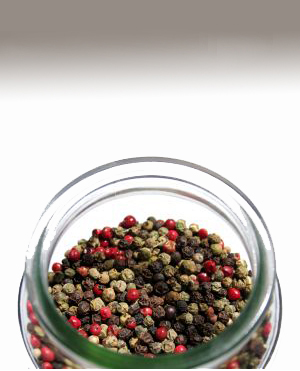
Black, pink and green peppercorns. Photo by Fran Gambín | SXC.
| WHAT IT IS: Varietal peppercorns—20 different pepper types and counting. |
|
WHY IT’S DIFFERENT: Each origin of the world produces pepper with different aromas and flavors—just like coffee beans and chocolate.
|
| WHY WE LOVE IT: Another way to vary food accents—and it has no calories! |
| WHERE TO BUY IT: Pepper-Passion.com, Kalustyans.com. |
|
|
|
KAREN HOCHMAN is Editorial Director of THE NIBBLE.
|
|
|
|
Varietal Peppercorns: Spice Up Your Life
Page 4: Pepper Glossary A & B
This is Page 4 of an 11-page article. Click on the black links below to visit other pages.
Pepper Glossary A & B
The peppercorns include these and more:
ALEPPO PEPPER (also called Halab Pepper, Halaby Pepper, Near Eastern Pepper, Syrian Red Pepper Flakes)
From Turkey and Northern Syria (the town of Aleppo, a famous food mecca, is located in Syria near the Turkish border), this spice is used to add heat and pungency to Middle Eastern dishes. While most of the “peppers” in our glossary are berries, this is a moderately hot red chile that is sun-dried, seeded and crushed. The chile’s high oil content provides a deep, rich aroma, somewhere between coffee and smoke—some compare it to the ancho chile. It has a moderate heat level and fruity notes with mild, cumin-like undertones. If you use crushed red pepper (a pizza staple), it is much more flavorful and complex than generic crushed red pepper, and without its harshness.
|
|
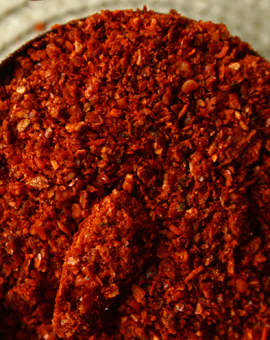
Aleppo Pepper: A smoky nose and a fruity palate. Photo by B.A. Van Sise | THE NIBBLE.
|
| Use It: The moderate heat of aleppo pepper is used locally in fish stews, rice pilaf, simmered beans and lentils.On roast chicken, any grilled meats (including kabobs), as an attractive red garnish for deviled eggs (or with any eggs), on potato, chicken, tuna and pasta salads, to add kick to green salads, in any Mediterranean dish (it’s delicious with yogurt and cucumbers or melon and mint salad), in tagines and couscous, in chili, on pizza. You can add the flakes to olive oil to infuse for a vinaigrette, marinade, rub or for sautéing. |
ALLSPICE
See Jamaican pepper.
BELL PEPPER
Not a member of the peppercorn family, but a type of chile. See our Chile Pepper Glossary.
BLACK PEPPER
The black peppercorn, Piper nigrum, is the largest category of pepper: corns are available from a variety of origins. Some are more robust, some more delicate; some have notes of pine, some have cinnamon spice. The most popular form of pepper in the U.S., the berries are picked before they fully mature, when the green berries have turned to gold but have not yet ripened to red. They are boiled briefly in hot water, both to clean them and to prepare them for drying, then allowed to ferment and dry naturally in the sun until the fruit shrinks and darkens into a thin, wrinkled black layer around the seed. Once dried, the fruits are called peppercorns. Black pepper is hot†, pungent and aromatic: the spicy heat derives largely from the piperine compound, which is found both in the outer fruit and in the seed. The outer fruit layer contains volatile oils that give pepper its scent. Colors range from deep brown to purple-black.
†How hot is it? Not very: Milligram-for-milligram, refined piperine is about 1% as hot as the capsaicin in chile peppers.
- Ecuador. See Talamanca del Caribe, below.
- Lampong. Cultivated on the island of Sumatra in Indonesia, Lampong is a smaller-size corn, similar to Sarawak black peppercorns, but hotter than Sarawak due to a higher amount of piperine. The peppercorns have a strong, earthy and smoky aroma with a hint of cinnamon. Lampong is the black peppercorn sold most often in the U.K.—they like their pepper hot—but the heat and flavor are extremely well-balanced, and they are milder than Malabar and Tellicherry. Lampong Samanca is the historical name for the modern port city of Kota Agung in southern Sumatra, Indonesia.
Use It: In stocks, soups and dishes when you are looking for pungency. Chef Trosch uses them on salmon.
- Madagascar. The island nation off the southwest coast of Africa that grows great vanilla also grows fine pepper, although 98% of it gets exported to France (Madagascar is a former French colony). Madagascan pepper is very popular with French chefs. The corn is of medium size and brownish-gray, and highly aromatic, with a smoky aroma, medium heat and a hickory finish. It is beginning to trickle into the U.S., but if you can’t find it, send friends traveling to France on a shopping trip.
Use It: With meats, shellfish, pasta, risotto, polenta and any foods that are appealing to pair with smoky nuances. It is very popular in sauces for steak: Wolfgang Puck offers a New York Steak with Madagascar Pepper & Port Wine Sauce in his book, Modern French Cooking for the American Kitchen.
- Malabar. One of the finest black peppers available, it is grown on the Malabar Coast, a small, mountainous area on the southwest of India known for producing the highest quality peppercorns. Berries that become Tellicherry (see below) grow together on the same vine, but Malabar pepper is picked from the lower part of the vine and is picked earlier (and less ripe than) Tellicherry—when the berries have turned from green to yellow. The Malabar corns have a slightly greenish hue. While Malabar peppercorns are noticeably larger in size and more potent than supermarket peppercorns, they are smaller and less potent than Tellicherry, both on the nose and on the palate.
Use For: Malabar has universal appeal. It is an excellent pepper with robust flavor, available at a more reasonable price than Tellicherry. Try them with pork.
- Sarawak. Grown in East Malaysia, Piper nigrum yields a smaller black berry with a slightly grayish hue. It has a milder flavor and more fresh aroma than pungent Telllicherry, that is often described as fruity.
Use It: The more delicate and fruity qualities make Sarawak perfect for dessert recipes. If you like pepper but would like slightly less heat and bitterness, try it as a seasoning on all of your foods.
- Talamanca Del Caribe. A varietal relatively new to the scene, this bold peppercorn is grown in small quantities in Ecuador and is certified organic. Ecuadorian peppercorns tend to be very high in piperine. They have a sweet, searing fragrance, but due to all of the piperine, they deliver intense heat. It has a very robust, meaty flavor and pungent aroma that will knock the socks off pepper lovers—and further intimidate the wary.
Use It: The piperines will ratchet up the pepperiness of anything: It goes well with steak. This is a peppercorn for those who love hot chiles.
- Tellicherry. Tellicherry is the best-known black peppercorn in the world, produced from the largest and best 10% of the berries on the vine. These berries grow at the top of the vine, receive the most sunlight and are allowed to ripen longer, until the color reaches yellow-orange and is closer to maturity. Longer ripening produces a larger fruit and more intense oils, which deliver a deeper, complex, spicy aromatic and a highly pungent flavor. Tellicherry is said to have a cucumber finish—see if you can find it. The color ranges from dark chocolate brown to black. A top-of-the-line Tellicherry is a great peppercorn.
|
|
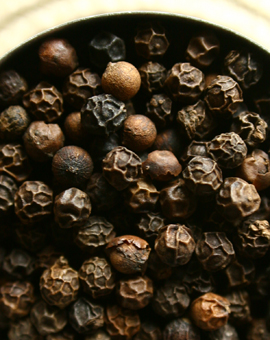
Tellicherry: the Champagne of black peppercorns.
Photo by B.A. Van Sise | THE NIBBLE.
|
| Use It: Tellicherry compliments almost any food, even melon and fresh strawberries! You can use it in any recipe. |
- Vietnam. Vietnam produces a fine black pepper, and is one of the largest exporters of black peppercorns. The berries are good-sized and have a citrusy aroma and taste. Its peppercorns are not as strong as those from other areas, but have a complex aroma—so people who like a rounder heat and spiciness but more on the nose should look for them.
Use It: On fish, in desserts.
Continue To Page 5: Peppercorn Glossary C To G
Go To The Article Index Above
FOR ADDITIONAL INFORMATION, special offers, contests, opinion surveys, THE NIBBLE back issues archive, product gift-finder and more, visit the home page of TheNibble.com.
|