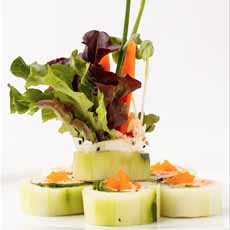
 A naruto roll is one that uses thinly sliced cucumber instead of toasted seaweed (nori) to hold the roll together. Photo courtesy Kabuki Restaurants.
July 2007
Last Updated September 2025
|
|
Types Of Sushi Rolls
And A Glossary Of Sushi & Sashimi Terms
Page 2: California Roll, Chirashi, Dragon Roll & Other Terms With C, D & E
Types of sushi rolls (maki), nigiri sushi, and other sushi types. If you enjoy this Sushi Glossary, we have a food glossary for almost every category of food. Check out the Seafood Glossary, too.
| |
Click on a letter to go to the appropriate glossary section.
a b c d e f g h i j k l m n o p q r s t u v w x y z
This glossary is protected by copyright and cannot be reproduced in whole or in part. You are welcome to link to it.
|
|
|
CALIFORNIA ROLL
Named after the state of California, the “avocado capital” of the U.S., a California roll combines avocado, cucumber, and crab leg (or imitation crab/surimi) in a reverse roll or uramaki.
The world’s top avocado grower is Mexico, followed by Colombia and Peru.
Here’s the history of the California roll, which is also the history of uramaki.
|
|

California roll (photo © Umami Information Center). |
|
CHAKIN-ZUSHI
Vinegared rice wrapped in a thin egg crêpe. Also called fukasa-sushi. The rice can be seasoned with nori flakes, sesame seeds, or other Japanese ingredients, such as caviar pearls. In addition to the style in the photo, it is also gathered up into a beggar’s purse-type pocket.
This sushi specialty is not found at most sushi bars in the U.S. because of the delicate nature of the wrap and the time required to make it.
See also inari-sushi, which is vinegared rice stuffed in a tofu pocket.
|
|
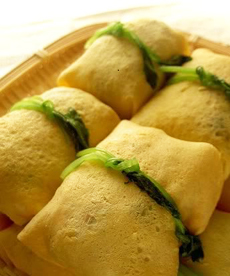
Chaikin-zushi. Photo courtesy TheSushiMan.Tumblr.com.
|
CHICKEN SUSHI
Sushi means “vinegared rice.” You can put anything on top of it, from fish to vegetables and fruits, even beef and chicken. Check out torikawa, crispy chicken skin nigiri, and torisashi, chicken breast served sashimi-style.
Chicken sushi is not part of Japanese sushi culture, but a creative adaptation, much like California rolls, made to appeal to American tastes.
 |
|

Karikari, crispy chicken skin, at O Ya in Boston. “Karikari” in Japanese means crispy or crunchy. So, when you see “karikari chicken,” it usually refers to crispy fried chicken (photo © O Ya).
At left, a fried chicken roll at Hai Street Kitchen in Philadelphia. It’s like the karaage fried chicken main course, but in a roll with vegetable accents (photo © Hai Street Kitchen & Co.).
|
|
CHIRASHI-SUSHI
A bowl of sushi rice topped (“scattered”) with assorted raw fish and vegetables; the rice has more vinegar and less sugar than the rice used for nigiri sushi.
The toppings are called gu and can consist of almost anything, raw or cooked.
Chirashi is different from “sashimi with a bowl of rice” because sashimi is fish only, not vegetables (except for daikon and carrots, and shiso leaf, typically used as garnish). Second, sashimi is served with a separate bowl of plain boiled rice, not set atop seasoned sushi rice.
The most common form of chirashi in Japan is vegetable chirashi; the dish is easy to make and is often served at home. Chirashi-sushi originated as bara-sushi in the Kansai region of Japan, where it was largely eels on rice.
Later, sushi chefs in the Kanto region scattered sashimi atop rice, the beginning of chirashi as we know it. Today, each restaurant has its own creative chirashi recipe.
In addition to sashimi selections, toppings can include ikura, kanpyo, nori, shiitake mushrooms, and tamago. See tekka-don.
|
|
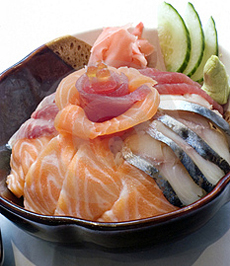
Chirashi sushi: fish layered over rice (photo © Dreamstime).
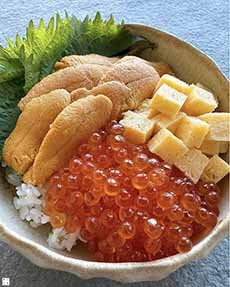
Luxury chirashi: uni, ikura, and tamago (photo © Regalis Foods). |
|
CHU-TORO
Medium fatty tuna, from the upper belly of the fish.
CRAB STICK
See kanikama.
CRUNCHY ROLL
Chinese bread crumbs, panko, are added, typically to chopped tuna or salmon, for crunch.
|
|

Chu-toro (photo © Sushi By Bae). |
|
CUCUMBER ROLL or KAPPA MAKI
Kappa maki, a roll of rice, cucumber, and usually, white sesame seeds.
CUCUMBER WRAP
A naruto roll (maki), where the rice and other ingredients are wrapped in a thin wrapping of cucumber instead of seaweed.
DAIKON
A large, long white radish (often called giant white radish). It’s usually served shredded as an edible garnish with sashimi.
|
|
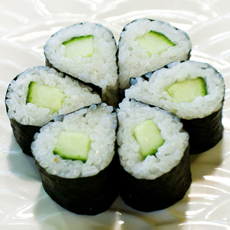
Cucumber roll. Photo courtesy Sushi Connection. |
|
DASHI
Dashi is the basic Japanese cooking stock made with kombu seaweed and bonito flakes. It is the base of miso soup, clear broth, noodle broth, and many simmering liquids. Different recipes flavor the dashi with kelp, shiitake mushrooms, or the heads of sardines.
As with stock in the U.S., time-strapped home cooks use granulated or liquid instant dashi instead of the [superior] homemade stock.
Dashi is also mixed into a flour base to make the batter for some grilled foods like okonomiyaki, Japanese pancakes, and takoyaki, snacks filled with minced octopus and other ingredients.
|
|
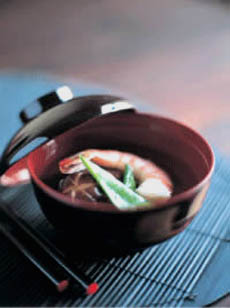
Dashi. Photo courtesy UmamiInfo.com. |
|
DRAGON ROLL
An American invention, the Dragon Roll is an inside-out roll with a center of eel (and sometimes, cucumber). Sliced avocado is applied to the surface to resemble the scales of a dragon (or more eel can be the topper). In the photo at right, the sushi chef has used a slice of eel and carrots to create the head of a dragon.
EBI
Shrimp. While boiled ebi are often served on a sushi combination plate, they are not considered a delicacy. The way to enjoy shrimp is via ama-ebi, raw shrimp, sashimi-style. Ama-ebi is a different species of shrimp.
|
|
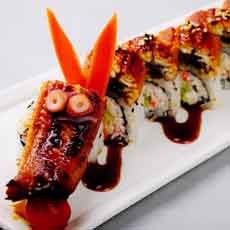
Dragon roll. Photo courtesy SushiConnection.com. |
|
EDAMAME
Soybeans steamed in the pod and salted, a popular starter at sushi bars. Learn more about edamame in our review of Seapoint Edamame.
EDOMAE-ZUSHI or EDO-STYLE SUSHI
An old term for nigiri-sushi, based on the Japanese word for Edo, as Tokyo was previously called, where the style was created.
|
|
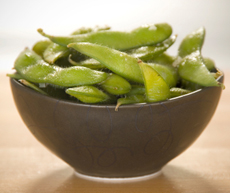
Edamame. Photo by Hilary Brodey | IST. |
|
EEL ROLL
Broiled eel (unagi), often combined
with avocado or cucumber and garnished with “eel sauce” (see kabayaki tare).
EEL SAUCE
Also known as unagi sauce and kabayaki sauce, eel sauce is a thick, sweet-and-savory glaze made from soy sauce, mirin, and sugar, reduced to a syrupy consistency. Despite its name, it does not contain eel; the name refers to its traditional use as a glaze for grilled freshwater eel (unagi). It is a popular condiment in Japanese cuisine, served not just with sushi, but with rice bowls, grilled meats, and vegetables.
|
|
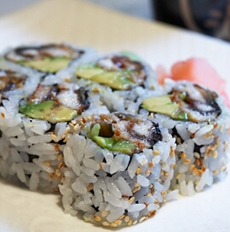
An eel avocado roll. Photo courtesy Ten Zan | New York City. |
|
EHOMAKI or UNCUT ROLL
Ehomaki, an uncut variety of futomaki roll, is eaten the evening of the festival of Setsubun, which marks the beginning of spring. The name means “lucky direction roll,” and people usually eat it while facing the direction considered to be auspicious that year. The lucky direction (eho) is specified according to the way of yin and yang, the esoteric cosmology based on ancient Chinese philosophy. A wish is made for prosperity and happiness during the year, and the roll is eaten in silence, lest luck escape through one’s mouth.
|
|

Ehomaki, or uncut roll. Here’s the recipe (photo © Foodex). |
|
The roll is composed of up to seven “lucky” ingredients honoring the Seven Gods of Fortune.
The seven ingredients include unagi (eel) or anago (sea eel) for strength, kanpyo (dried gourd strips) for prosperity, shiitake mushrooms for longevity, tamagoyaki (sweet rolled omelet) for happiness, sakura denbu (sweet pink fish flakes) for celebration, cucumber for health, and oboro (boiled shrimp) for cheer and festivity.
The tradition began in the Kansai region, particularly Osaka, in the 18th century. It took a while, but by 2000, the tradition had spread to all of Japan. |
|
ENGAWA
Fluke fin. This portion of flesh, near the tail end of the fish, has a feathery texture and is popular with connoisseurs.
|
ESCOLAR
Escolar, Lepidocybium flavobrunneum, is a fish found in tropical and temperate waters around the world. It is also known as snake mackerel and is sometimes fraudulently marketed as “butterfish” or “white tuna,” a controversial practice due to potential health problems related to consumption of the fish. It has a high wax ester that can cause keriorrhea, a condition similar to diarrhea, only the body will expel yellowish-orange drops of oil (the ester from the fish). Headaches and stomach cramps can accompany the keriorrhea. Portions of six ounces or less seem to limit the negative effects, so a few pieces of mislabeled escolar at the sushi bar may not be harmful.
|
|
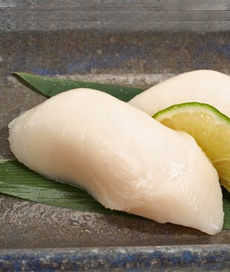
Escolar. Photo courtesy Catalina Offshore Products. |
Continue To Page 3: Definitions F To G
Go To The Alphabet Index Bar Above
© Copyright 2005- Lifestyle Direct, Inc. All rights reserved. Images are the copyright of their respective owners.
|
© Copyright 2005-2026 Lifestyle Direct, Inc. All rights reserved. All images are copyrighted to their respective owners.
|