Carrots are full of beta carotene. Photo courtesy Preserved Products.
May 2005
Last Updated January 2014
|
|
Organic Food Definitions
Plus Natural Food, Health & Wellness Definitions
Glossary Page 2: Terms Beginning With B & C
This is page 2 of a 7-page glossary of organic food definitions. See also our Glossary of Antioxidant Terms and Eco Terms (Green Glossary). See our entire collection of many more food glossaries.
Click on a letter to go to the appropriate glossary section:
a b c d e f g h i j k l m n o p q r s t u v w x y z
This glossary is protected by copyright and cannot be reproduced in whole or part.
You are welcome to link to it.
B-CORP or B-CORPORATION CERTIFICATION
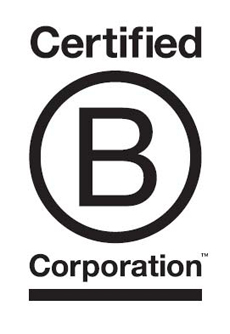
B Corp certification is to sustainable businesses what Fair Trade and USDA Organic certification are to companies that bear those labels. It ensures that companies and products that claim to be “green” and “sustainable” not only talk the talk, but walk the walk. Following thorough scrutiny by the nonprofit B Lab to meet rigorous standards of social and environmental performance, accountability, and transparency, companies are certified and permitted to use the B-Corp logo (at right). B Lab was formed in 2009 and today certifies companies in 29 countries and 60 industries. B-Corporation certification can be earned by anything from food to health initiatives for employees to eco-friendly materials. |
|
 |
BETA CAROTENE
A form of carotene that is most efficiently converted to vitamin A by the body. It is found in dark green and dark yellow fruits and vegetables. Carotene, an orange pigment important for photosynthesis, is responsible for the orange color of carrots, orange-flesh squashes and sweet potato, as well as greens such as collards and spinach. See carotenoid.
BIODYNAMIC AGRICULTURE
|
Biodynamic agriculture dates back to 1924, is considered the oldest comprehensive method of farming and is practiced around the world. A more rigorous process than organic farming, it sustains soil productivity and maintains biodiversity with the use of organic pest controls, crop rotation and the cyclical rhythms of nature. It supports everything that is natural and forbids the use of chemicals, herbicides and fungicides; it aims for a balanced ecosystem, biodiversity and the recovery of the bacterial activity in the soils. The only fertilizers allowed are the vegetable and animal wastes from a biodynamic farm. Biodynamic agriculture assumes that the moon cycles and the position of other planets influence the vines, as it happens with the tides. All the work in the vineyards is planned taking into account the different moon phases and the stellar dynamics. Practitioners attest that biodynamic agriculture results in a greener planet, self-sustaining farms, healthier soil, and great-tasting food and wines that are rich in nutrients. In order for a product to be labeled as Biodynamic, it must comply with strict standards set by Demeter USA (demeter-usa.org). Biodynamic® is a registered trademark held by Demeter Association Inc. (see certification seal at left) and is globally recognized as a symbol for products grown using approved Biodynamic methods. Read our complete article on biodynamic versus organic farming.
|
|
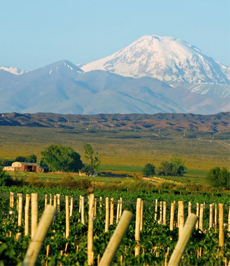
One of the biodynamic Trapiche Vineyards in Argentina.
Demeter USA logo.
|
BIRD FRIENDLY COFFEE
Under a program established by the Smithsonian Institution to protect the habitat of songbirds in rapidly-deforested coffee-growing regions, Bird Friendly coffee must be shade grown as well as organic; companies selling these coffees contribute 25 cents per pound sold to the Smithsonian Migratory Bird Center to support research and conservation programs. See shade-grown coffee. |
|
 |
BOVINE GROWTH HORMONE (rBGH/rBST)
|
A bioengineered hormone given to dairy cows to maximize milk production. Also known as rBST (Recombinant Bovine Somatotropin) and rBGH (Recombinant Bovine Growth Hormone). Somatropin is a genetically-engineered copy of a naturally-occurring hormone produced by cows, that is injected into dairy cows bi-weekly to increase their milk production. It is legal in only three countries: the United States, South Africa and Mexico. Cows injected with the hormone have shorter life spans and are much more likely to suffer from udder infections; evidence is accumulating that it may promote breast and prostate cancer in humans who drink milk from rBGH-treated cows.
|
|
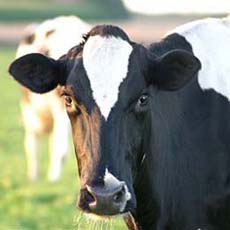
Organic milk contains so bovine growth hormone. Better brands of conventional milk are labeled rBGH-free or RBST-free. Photo by Rob Waterhouse | SXC.
|
Milk from cows injected with rBGH cannot be certified organic. rBGH/rBST was one of the first major biotechnology-related products to enter the nation’s food supply: It was approved in 1993 by the Food and Drug Administration. Today, about 15% to 20% of U.S. dairy cows are injected with the hormone.
BPA or BISPHENOL A
les that is believed to leach carcinogens into the liquid. Since this research was published in 2008, many manufacturers are planning to change their plastic.
CAA or CELLULAR ANTIOXIDANT ACTIVITY ASSAY
|
The new CAA (cellular antioxidant activity) assay is a more biologically relevant method of measuring antioxidants because it accounts for some aspects of uptake, metabolism, and location of antioxidant compounds within cells. Antioxidant activity has been previously measured using a range of lab-based assays, including the ferric reducing ability of plasma (FRAP) assay, the oxygen radical absorbance capacity (ORAC) and Trolox equivalent antioxidant capacity (TEAC). The CAA centers on dichlorofluorescin, a probe trapped within cells that can be easily oxidized to produce fluorescence. The decrease in cellular fluorescence when compared to the control cells indicates the antioxidant capacity of the compounds. The popular ORAC is still a valuable test; CAA shows how the compounds react with cells and are believed to be is a stronger measure of how antioxidant compounds could potentially react in the body.
|
|
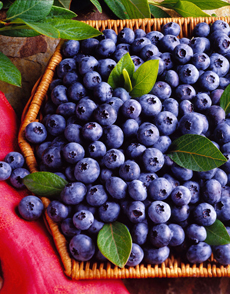
Instead of ORAC levels, we should soon be seeing CAA levels that measure the antioxidants in foods. Photo courtesy BlueberryCouncil.org.
|
C.A.F.E. PRACTICES
|
C.A.F.E. Practices (Coffee and Farmer Equity Practices) are a set of socially- and environmentally-responsible guidelines for producing, processing and buying coffee, that were established by Starbucks in 2001, in cooperation with Conservation International (Conservation.org), a nonprofit organization that promotes biodiversity conservation in rain forests and other ecosystems worldwide.
|
|

Photo courtesy Starbucks. |
CAGE-FREE EGGS
|
Cage-free eggs are laid by hens that are not kept in battery cages. Advocates contend that contends that cage-free eggs definitely taste better and are healthier. However, critics say that cage-free doesn’t mean comfortable: In some operations, many thousands of hens can be packed together in a crowded indoor space, flapping their clipped wings, fluttering on top of one another—not really an improvement over being physically safe but constrained in a cage. Currently, cage-free operations are not well regulated. We recommend paying a bit more for USDA Certified Organic eggs, which are inspected. The hens have access to the outdoors and sunlight, are fed organic feed, and in our experience, lay much tastier eggs.
|
|
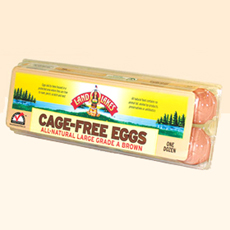
Photo courtesy Land O’ Lakes. |
CAROB BEAN GUM, CARRAGEENAN & LOCUST BEAN GUM
|
Carob bean gum, carrageenan and locust bean gum are natural food stabilizers derived from plants and seaweed. They generally comprise a fraction of a percent of the product volume, so they do not affect the taste. The enable fresh foods to be made shelf-stable (i.e., they give products a “shelf life” by keeping them from breaking down for a certain period of time, and protect them from temperature fluctuations).
|
|
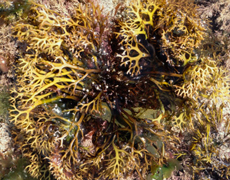
Carrageenan is extracted from algae. It is a gelling agent. Photo courtesy Seaweed.ie. |
CATECHIN
|
Catechins are flavanols, a subclass of flavonoids, the antioxidants in tea. Tea contains four main catechin substances, all of which are inclusively called “catechin”: The four primary polyphenols* found in fresh tea leaves are epigallocatechin gallate (EGCG), epigallocatechin (EGC), epicatechin gallate (ECG) and epicatechin (EC). Epigallocatechin gallate (EGCG) is the one most abundant in tea, and is about 25 to 100 times more potent than antioxidant vitamins C and E. Green tea contains between 30% and 40% of water-extractable polyphenols, while black tea contains between 3% and 10%. Oolong tea is somewhere between green and black tea, and white tea has somewhat more than green tea.
|
|
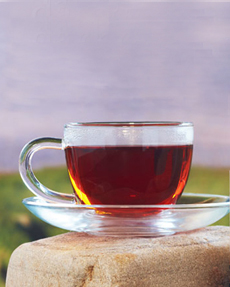
Catechins are found in tea leaves. Photo courtesy Republic Of Tea. |
According to recent research, adding citrus juice to tea significantly boosts the antioxidant absorption in the stomach, while adding milk does the opposite—the proteins in milk’s casein counteract the counteracts the antioxidant effectiveness. Read more about high-antioxidant foods.
*EGCG etc. > Catechin > Flavonoid > Polyphenol.
CAROTENOID
A class of red, orange and yellow pigments in fruits and vegetables, carotenoids include the carotenes, one of which, beta-carotene, is one of the best-known antioxidants. Others in the group include lutein, lycopene and zeaxanthin and the xanthophylls.
CELLULAR ANTIOXIDANT ACTIVITY
ASSAY
See CAA.
|
|
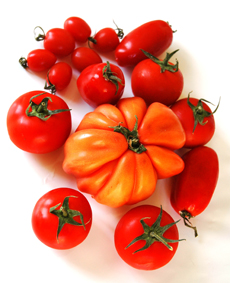
Tomatoes are full of lycopene, a carotenoid. Photo by Nathalie Dulex | SXC. |
CERTIFIED HUMANE FOOD
|
The Certified Humane Raised & Handled program is an inspection, certification and labeling program for meat, poultry, egg and dairy products from animals raised to humane care standards. Products that are certified are identified with the logo shown at the right. Developed with the welfare of the individual animal in mind, Certified Humane standards ensure that each animal is treated humanely and in accordance with the highest farm animal welfare standards available today, when it is raised, transported and processed.
|
|
 |
The program is a voluntary, user-fee based service available to producers, processors and transporters of animals raised for food. The purpose of the program is to provide independent verification that the care and handling of livestock and poultry on farms enrolled in the program meet high quality humane animal care standards. The program is managed by Humane Farm Animal Care (HFAC), a non-profit organization. The United States Department of Agriculture, Agricultural Marketing Service (AMS) Livestock and Seed Program verifies the inspection process of the Certified Humane Raised and Handled program. For more information visit CertifiedHumane.com.
CERTIFIED ORGANIC
In the U.S., “certified organic” means that an independent organization accredited by the U.S. Department of Agriculture (USDA) has verified that a manufacturer’s products meet strictly defined organic standards as specified by the NOP. This certification protects consumers and ensures the product’s value. See also organic products.
CLA
See conjugated linoleic acid.
|
|
 |
CLOSED HERD
|
A herd of farm animals that is 100% born and raised on the farm. No animals are ever brought in from the outside. This ensures the health of the herd; outside animals can bring in infections, viruses and diseases including “mad cow” and hoof and mouth disease. Maintaining a closed herd is especially important to an organic herd, since animals cannot be treated with antibiotics, and an animal requiring such care must be removed from the herd.
|
|
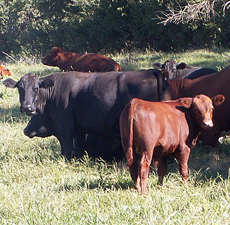 A closed herd of Black Angus cattle. Photo courtesy Wikimedia. A closed herd of Black Angus cattle. Photo courtesy Wikimedia. |
COMPOSTING
Compost is a mixture of decaying organic substances, from food to dead leaves to manure, that is used for fertilizing soil. It is the purposeful biodegradation of organic matter performed by micro-organisms: bacteria, fungi and yeasts. Composting recycles (some say “upcycles”) organic kitchen waste (“organic” here refers to any food and not to USDA-organic certified food) into an humus-like soil product, which returns to the soil organic matter, nutrients and bacteria that are vital to plant nutrition. Disposable dishes and packaging made of corn resin are compostable. Organic yard waste and manures are also composted.
|
|
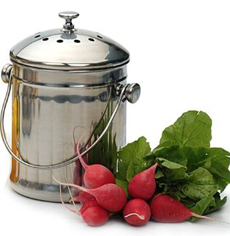 This mini composter sits on the kitchen counter to hold cooking scraps. Photo courtesy RSVP. This mini composter sits on the kitchen counter to hold cooking scraps. Photo courtesy RSVP. |
Leftover food is composted instead of being collected as trash; then added to the garden soil to boost plant health as it helps the environment by reducing landfill. Composting yard waste eliminates 50% to 75% of what would normally be hauled to the dump.
CONJUGATED LINOLEIC ACID (CLA)
Conjugated linoleic acids (CLA) are isomers of linoleic acid found in red meat and dairy products, among others. They are trans fatty acids; however, as opposed to all of the “bad” trans fats, they have beneficial health effects as a potent anti-carcinogen. Studies indicate that CLA shrinks tumors.
|
|
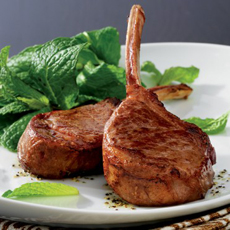
Lamb and other red meats are good sources of conjugated linoleic acid. Photo courtesy Allen Brothers. |
CSA
CSA is an acronym for community-supported agricultural group. An arrangement between farmers and community members, CSAs provide farmers with advance payment—cash in hand to run the farm—and “subscribers” so they know exactly how much to plant. Consumer participants paying an up-front fee and in return receive a weekly box of fresh, locally-grown produce. The contents differ each week and participants never know what they’ll get, but it follows seasonal trends: root vegetables in the fall, citrus in the winter, tomatoes in the summer, etc. Members generally pick up their boxes of produce at a central location in the community. In many cases, participants can also visit and help work the farm.
|
|
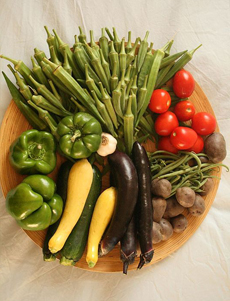
A CSA provides a weekly fresh bounty to members. Photo courtesy Claggett Farm. |
Some people join a CSA to help local farmers, others like to know where their food comes from and still others are locavores who want to enjoy the freshest fruits and vegetables, those that haven’t been sitting in cold storage or traveling six weeks by boat. Another customer segment likes the “grab bag” aspect of being surprised by their “foods of the week.” In 2008, more than 1,500 CSAs were operating nationwide, up from 50 in 1990. Shares are reasonable, generally about $20 to $30 a week, although the Fulton Center for Sustainable Living reports the average cost per participant in 2007 as $500 to $900. The CSA concept originated in Europe and Asia in the 1980s as an alternative financing arrangement, to help sustain small-scale farmers. Not surprisingly, the concept is most popular in states with the most farms, including California, New York, Pennsylvania and Wisconsin.
Continue To Page 3: Terms Beginning With D To F
Go To The Alphabet Index Above
|